Special issue of
Language and Literature
2006, volume 15,
number 1
Edited by
Barbara Dancygier
- Barbara Dancygier. What can blending do for you?
2006 15: 5-15.
- Mark Turner. Compression
and representation.
2006 15: 17-27.
- Eve Sweetser. Whose
rhyme is whose reason? Sound and sense in Cyrano de Bergerac.
2006 15: 29-54.
- Elena Semino. Blending and characters’ mental functioning
in Virginia Woolf's ‘Lappin and Lapinova’. 2006 15: 55-72.
- Vera Tobin. Ways of reading Sherlock Holmes: the entrenchment of
discourse blends. 2006 15: 73-90.
- Sean McAlister. ‘The explosive devices of memory’:
trauma and the construction of identity in narrative. 2006 15: 91-106.
- Margaret H. Freeman. Blending: A Response. 2006 15: 107-117.

- Introduction.
Seana Coulson and Todd Oakley.
- Blending and coded meaning: Literal and figurative meaning in cognitive
semantics.
Seana Coulson and Todd Oakley
- Blending out of the background: Play, props and staging in the
material world. Chris Sinha.
- Material anchors for conceptual blends.
Edwin Hutchins.
- Mental spaces and cognitive semantics: A critical comment. Per Aage
Brandt
- Primary metaphors as inputs to conceptual integration.
Joseph Grady.
- Constraining conceptual integration theory: Levels of blending
and disintegration.
Carl Bache.
- Blending and polarization: Cognition under pressure.
Peter Harder.
- Conceptual disintegration and blending in interactional sequences:
A discussion of new phenomena, processes vs. products, and methodology.
Anders Hougaard.
- Mimesis, artistic inspiration and the blends we live by.
Tim Rohrer.
- Creating mathematical infinities: Metaphor, blending, and the beauty
of transfinite cardinals.
Rafael E. Núñez.
Special issue of
Cognitive Linguistics 11:3-4 (2000) on
Conceptual Blending
edited by
Seana Coulson and Todd Oakley
.
- Coulson, Seana and
Todd Oakley. "Blending basics." Pages 175-196.
- Mandelblit, Nili. "The
grammatical marking of conceptual integration: From syntax to morphology."
pages 197-252.
- Veale, Tony and Diarmuid
O'Donoghue. "Computation and blending." Pages 253-282.
- Fauconnier, Gilles
and Mark Turner. "Compression and global insight." Pages
283-304.
- Sweetser, Eve. "Blended
spaces and performativity." Pages 305-334.
- Grady, Joseph. "Cognitive
mechanisms of conceptual integration." Pages 335-346.
- Gibbs, Raymond W., Jr. "Making good psychology out of blending
theory." Pages 347-358.
Conferences,
Symposia, Lecture Series
Articles
and talks

- Alexander, James. 2008. "Mathematical
Blending ." Draft pdf.
- Alexander, James. 2011. Blending in mathematics. Semiotica. Volume 2011, Issue 187, Pages 1-48, ISSN (Online) 1613-3692, ISSN (Print) 0037-1998, DOI: 10.1515/semi.2011.063
- Antović
, Mihailo. 2018. Waging war against oneself: A metaphor at the heart of Christian ascetic practice. In P. Chilton and M. Kopytowska (Eds.), Religion, Language and the Human Mind, (pp. 386-406). New York: Oxford University Press.
- Antović
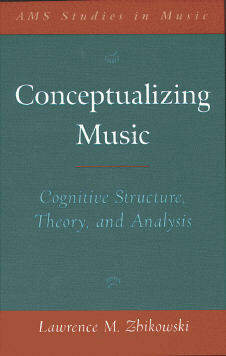
, Mihailo. 2018. Schemas, grounds, meaning: On the emergence of musical concepts through conceptual blending. Musicae Scientiae, 22(1), 57-71. "This article offers a new theoretical approach to the conceptualization of music, based on Conceptual Blending Theory."
- Birdsell, Brian. 2019. Creative Cognition: Conceptual Blending and Expansion in a Generative Exemplar Task. IAFOR Journal of Psychology & the Behavioral Sciences. https://doi.org/10.22492/IJPBS.5.SI.03
- Birgisson, Bergsveinn. 2012. "Blends Out of Joint: Blending Theory and Aesthetic Conventions." Metaphor and Symbol 27(4), 283-298.
- Bizup, Joseph.
"Blending in Ruskin."
- Bonifazi, Anna. 2018. The forbidden fruit of compression in Homer. In The Routledge Handbook of Classics and Cognitive Theory, edited by Peter Meineck, William Michael Short, and Jennifer Devereaux. Routledge.
- Brandt, Line & Per Aage Brandt. 2005. "Making sense of a
blend:A cognitive-semiotic approach to metaphor." Annual
Review of Cognitive Linguistics, 3, pp. 216-249.
- Brandt, Line &
Per Aage Brandt. 2005. "Cognitive Poetics and Imagery."
European Journal of English Studies, volume 9, number,
pages 117-130.
- Brandt,
Per Aage. In press. "Cats in Space." Acta Linguistica.
[Jakobson and Lévi-Strauss' structuralist reading of Baudelaire's
"Les Chats" is reconsidered in light of cognitive rhetoric and conceptual
blending theory.]
- Bundgård, Peer
F. 1999. "Cognition and Eventstructure," Almen Semiotik 15:
78-106. [A review of conceptual integration theory.]
- Burke, Michael. 2003. "Literature as Parable." In Cognitive
Poetics in Practice, eds. Gavins, J. & Steen G. London: Routledge,
pages 115-128.
- Cánovas, Cristóbal Pagán. 2011. "The Genesis of the Arrows of Love: Diachronic Conceptual Integration in Greek Mythology." American Journal of Philology 132(4): 553-579. | DOI: 10.1353/ajp.2011.0044.
-
Casonato, Marco M.. 2000. "Scolarette sexy: processi cognitivi
standard nella scena della perversione." Psicoterapia: clinica,
epistemologia, ricerca, 20-21, Spring. [An analysis of the role
of blending in sexual imagination and realized fantasy, including
but not restricted to "perverse" scenes.]
- Casonato, Marco, Gilles Fauconnier and Mark Turner. "L’immaginazione
ed il cosiddetto 'conflitto' psichico." Annuario di Itinerari
Filosofici, volume 5 (Strutture dell'esperienza), number
3 (Mente, linguaggio, espressione). Milano: Mimesis, 2001.
- Chen, Melinda. 2000.
"A Cognitive-Linguistic View of Linguistic (Human) Objectification."
A discussion of blends in objectifying human beings.
- Cienki, Alan and Deanne
Swan. 1999. "Constructions, Blending, and Metaphors: Integrating
Multiple Meanings."
Sixth International Cognitive Linguistics Conference. Stockholm,
July.
-
Collier, David and Stephen Levitsky. 1997. "Democracy with
Adjectives: Conceptual Innovation in Comparative Research." World
Politics 49:3 (April), 430-451.
- Copland, Sarah. 2008. "Reading in the Blend: Collaborative
Conceptual Blending in the Silent Traveller Narratives."
Narrative, volume 16, number 2, pages 140-162.
-
Coulson, Seana. 1995. "Analogic and metaphoric mapping in blended
spaces" Center for Research in Language Newsletter, 9,
1: 2-12.
- Coulson, Seana. "Conceptual
Integration and Discourse Irony." Beyond Babel: 18th Annual Conference
of the Western Humanities Alliance. San Diego, October 1999.
- Coulson, Seana and
Gilles Fauconnier. 1999. Fake Guns and Stone Lions:
Conceptual Blending and Privative Adjectives. In B. Fox,
D. Jurafsky, & L. Michaelis (Eds.) Cognition and Function
in Language. Palo Alto, CA: CSLI.
- Coulson, Seana and Van Petten, C. 2002. "Conceptual integration and metaphor: an event-related potential study."
Memory and Cognition, 30 (6) (2002), pp. 958–968. "Consistent with conceptual blending theory, the results suggest that the demands of conceptual integration affect the difficulty of both literal and metaphorical language."
-
Csabi, Szilvia. 1997. "The Concept of America in the Puritan
Mind." Paper to be presented at the 5th Conference of the International
Cognitive Linguistics Association, Amsterdam, July 14-19, 1997.
-
Delbecque, Nicole & Maldonado, Ricardo. 2011. Spanish ya: A conceptual pragmatic anchor.
Journal of Pragmatics 43 (2011) 73–98. ["The basic idea is that ya is a blend that instantiates a dynamic progression over a programmatic base."]
- Dudis, Paul, G. 2004. Body partitioning and real-space blends. Cognitive Linguistics 15:2, 223- 238.
- Evans, Vyvyan. (Website) 1999. "The Cognitive Model
for Time." Beyond Babel: 18th Annual Conference of the Western Humanities
Alliance. San Diego, October.
- Fauconnier, Gilles. 2001. "Conceptual blending and analogy."
In Gentner, Dedre, Keith Holyoak, and Boicho Kokinov, editors. 2001.
The analogical mind: Perspectives from cognitive science.
Cambridge, MA: MIT Press. Pages 255-286.
- Fauconnier, Gilles.
1999. "Embodied Integration."
Sixth International Cognitive Linguistics Conference. Stockholm,
July.
- Fauconnier, Gilles.
2000. "Methods and Generalizations." In T. Janssen and G. Redeker,
editors, Cognitive Linguistics: Foundations, Scope, and Methodology.
The Hague: Mouton De Gruyter. Pages 95-127. [Cognitive Linguistics
Research Series]
- Fauconnier, Gilles.
2000. "Conceptual Integration and Analogy." In Gentner, D., Holyoak,
K. J., & Kokinov, B. N., editors, The analogical mind: Perspectives
from cognitive science. Cambridge, MA: MIT Press.
- Fauconnier, Gilles. 2005.
Compression and Emergent Structure. In S. Huang, ed. Language
and Linguistics. 6.4:523-538.
- Fauconnier, Gilles. 2003. Compressions
de Relations Vitales dans les Réseaux d'Intégration
Conceptuelle. In Jean-Louis Aroui, editor. Le Sens et la
Mesure. Paris: Honoré Champion.
-
 Fauconnier, Gilles& Mark Turner.
"The Origin of Language as a Product of the Evolution of Double-Scope
Blending." 2008. Commentary, Behavioral
and Brain Sciences.
Fauconnier, Gilles& Mark Turner.
"The Origin of Language as a Product of the Evolution of Double-Scope
Blending." 2008. Commentary, Behavioral
and Brain Sciences.
-
 Fauconnier, Gilles and Mark Turner. 2008. "The
Origin of Language as a Product of the Evolution of Modern Cognition,"
in Laks, Bernard, et al., editors, Origin
and Evolution of Languages: Approaches, Models, Paradigms. London:
Equinox. Pdf of draft.
Fauconnier, Gilles and Mark Turner. 2008. "The
Origin of Language as a Product of the Evolution of Modern Cognition,"
in Laks, Bernard, et al., editors, Origin
and Evolution of Languages: Approaches, Models, Paradigms. London:
Equinox. Pdf of draft.
-
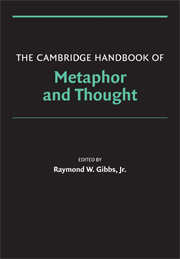 Fauconnier, Gilles & Mark Turner. 2008. "Rethinking Metaphor".
Ray Gibbs, editor, Cambridge
Handbook of Metaphor and Thought. New York: Cambridge University
Press. Pages 53-66. CSN version.
Fauconnier, Gilles & Mark Turner. 2008. "Rethinking Metaphor".
Ray Gibbs, editor, Cambridge
Handbook of Metaphor and Thought. New York: Cambridge University
Press. Pages 53-66. CSN version.
-
Fauconnier, Gilles and
Turner, Mark . 1994. "Conceptual Projection and Middle Spaces."
UCSD Department of Cognitive Science
Technical Report 9401. CSN version.
- Fauconnier and Turner.
1996. "Blending as a Central Process of Grammar" in Conceptual
Structure, Discourse, and Language. Edited by Adele Goldberg.
Stanford: Center for the Study of Language and Information (CSLI),
113-130 [distributed by Cambridge University Press]. Expanded CSN version.. [A Polish translation appears in Jezykoznawstwo
kognitywne II: Zjawiska pragmatyczne (Cognitive Linguistics
II: Pragmatic Phenomena). Edited by Wojciech Kubinski and Danuta
Stanulewicz. Gdansk, Poland: Wydawnictwo Uniwersytetu Gdanskiego
(University of Gdansk Press), 2000.]
- Fauconnier and Turner.
1998. "Principles of Conceptual Integration." Discourse and
Cognition. Edited by Jean-Pierre Koenig. Stanford: Center for
the Study of Language and Information (CSLI), 269-283 [distributed
by Cambridge University Press].
- Fauconnier and Turner.
1999.
"Metonymy and Conceptual Integration." In Metonymy in Language
and Thought. Edited by Klaus-Uwe Panther and Günter Radden.
Amsterdam: John Benjamins. Pages 77-90. [A volume in the series
Human Cognitive Processing].
- Fauconnier and Turner. 2003.
"Polysemy and Conceptual Blending." In Polysemy: Flexible
Patterns of Meaning in Mind and Language. Edited by Brigitte
Nerlich, Vimala Herman, Zazie Todd, and David Clarke. John Benjamins.
Berlin & New York: Mouton de Gruyter, pages 79-94. A volume
in the series Trends in Linguistics.
- Fauconnier and Turner.
"Compression and Global Insight." Cognitive Linguistics.
11:3-4 (2000). Pages 283-304
-
Fauconnier, Gilles and
Turner, Mark . 1998. "Conceptual Integration Networks." Cognitive Science.
Volume 22, number 2 (April-June 1998), pages 133-187. Expanded CSN version. [original article] [A
Danish translation by Martin Skov, "Konceptuelle integreringsnetværk,"
appears in Kognitiv semiotik, edited by Peer F. Bundgård,
Jesper Egholm, and Martin Skov (Copenhagen: Haase
& Søns, 2003).]
- Fludernik, Monika,
Donald Freeman, and Margaret Freeman. 1999. "Metaphor and Beyond:
An Introduction." Poetics Today. 20:3, 383-396.
- Forceville, Charles.
"Blends and metaphors in multimodal representations." 7th International
Cognitive Linguistics Conference, July 2001.
- Freeman, Donald. 1999.
"'Speak of me as I am': The Blended Space of Shakespeare's Othello."
Beyond Babel: 18th Annual Conference of the Western Humanities Alliance.
San Diego, October.
- Freeman, Margaret.
2008. “Reading Readers Reading a Poem: From Conceptual to
Cognitive Integration.” Cognitive
Semiotics, 2.
- Freeman, Margaret.
1997. "'Mak[ing]
new stock from the salt': Poetic Metaphor as Conceptual Blend in
Sylvia Plath's 'The Applicant'."
-
Freeman, Margaret. 1997. "Grounded spaces: Deictic -self anaphors
in the poetry of Emily Dickinson," Language and Literature,
6:1, 7-28. [Contains a blended space analysis of Dickinson's "Me
from Myself - to banish -"]
- Freeman, Margaret.
1999. "The Role of Blending in an Empirical Study of Literary Analysis."
Sixth
International Cognitive Linguistics Conference. Stockholm, July.
- Freeman, Margaret.
1999. "Sound Echoing Sense: The Evocation of Emotion through Sound
in Conceptual Mapping Integration of Cognitive Processes." Beyond
Babel: 18th Annual Conference of the Western Humanities Alliance.
Sixth International Cognitive Linguistics Conference. San Diego,
October.
- Goguen,
Joseph. 1999. "An Introduction to Algebraic Semiotics, with Application
to User Interface Design." In Computation
for Metaphor, Analogy, and Agents. Edited by Chrystopher
Nehaniv. Berlin: Springer-Verlag, pages 242-291. A volume in the
series Lecture Notes in Artificial Intelligence. ["This paper
introduces a new approach to user interface design and other areas,
called algebraic semiotics. . . . One important mode of composition
is blending . . .; we relate this to certain concepts from
the very abstract area of mathematics called category theory."]
- Several papers by Joseph Gogen and his lab, at Computational
Narratology:
- "Style as Choice of Blending Principles," by Joseph
Goguen and Fox Harrell.
- "Foundations for Active Multimedia Narrative: Semiotic spaces
and structural blending," by Joseph Goguen and Fox Harrell.
- "Steps towards a Design Theory for Virtual Worlds,"
by Joseph Goguen.
- "Semiotic Morphisms, Representations, and Blending for User
Interface Design," by Joseph Goguen..
- "Information Visualization and Semiotic Morphisms,"
by Joseph Goguen and Fox Harrell.
- "An Introduction to Algebraic Semiotics, with Applications
to User Interface Design," by Joseph Goguen.
- Grady, Joseph., Todd
Oakley, and Seana Coulson. 1999. "Conceptual
Blending and Metaphor." In Metaphor in cognitive linguistics,
edited by Steen, G., & Gibbs, R. Amsterdam and Philadelphia: John
Benjamins.
- Gréa, M. Philippe. "La théorie de l’intégration
conceptuelle appliquée à la métaphore et la
métaphore filée." Dissertation.
- Grush, Rick and Nili
Mandelblit. 1997. "Blending in language, conceptual structure, and
the cerebral cortex." pdf
version.The Roman Jakobson Centennial Symposium: International
Journal of Linguistics Acta Linguistica Hafniensia Volume 29:221-237.
Per Aage Brandt, Frans Gregersen, Frederik Stjernfelt, and Martin
Skov, editors. C.A. Reitzel: Copenhagen.
- Grygiel, Marcin. 2004. “Semantic
change as a process of conceptual blending.” In F. J.
Ruiz de Mendoza, editor, Annual Review of Cognitive Linguistics
2, 285-304, Amsterdam/Philadelphia: John Benja.mins Publishing Company.
- Hart, F. Elizabeth. 2006. "The View of Where We've Been and Where We'd Like to Go." College Literature 33.1. 225-37. [“Fauconnier and Turner's theory of cognitive blending will be the aspect of cognitive linguistics that has the most lasting impact on literary studies.”]
- Hart, Christopher. 2007. "Critical Discourse Analysis and Conceptualilsation:
Mental Spaces, Blended Spaces, and Discourse Spaces in the British
National Party." In Hart, Christopher and Dominik Lukes, editors. Cognitive
Linguistics in Critical Discourse Analysis: Application and Theory. Cambridge Scholars Publishing.
- Hart, F. Elizabeth. 2006. “The View of Where We've Been and Where We'd Like to Go.” College Literature 33.1 (2006), 225-37. [“Fauconnier and Turner's theory of conceptual blending will be the aspect of cognitive linguistics that has the most lasting impact on literary studies.”]
- Hedblom, Maria M., Oliver Kutz, Rafael Peñaloza, & Giancarlo Guizzardi. 2019. Image Schema Combinations and Complex Events. KI-Künstliche Intelligenz 33:279–291. https://doi.org/10.1007/s13218-019-00605-1. "This line of combining image schemas to build new ones can be interpreted as a particular instance of the theory of conceptual blending . . . The theory proposes that all novel ideas are a result of blending already existing information by re-combining the given information selectively. . . . Given that blending is a fundamental principle of generation, one of the most basic forms of combining image schemas is, therefore, to selectively blend properties of different image schemas into new ones."
-
Hedblom, Maria M., Oliver Kutz, & Fabian Neuhaus. 2014. On the cognitive and logical role of image schemas in computational conceptual blending, Proc. of the 2nd International Workshop on Artificial Intelligence, Torino, p. 110-121.
- Herman, Vimala . 1999. "Deictic Projection and Conceptual Blending
in Epis
- Hiles, John. 2003.
"Integrated Asymmetric Goal Organization (IAGO): A Multiagent Model
of Conceptual Blending." White Paper, Naval Postgraduate School.
-
Hiraga, Masako . 1999. "Blending and an interpretation of Haiku."
Poetics Today. 20:3, 461-482.
- Hiraga, Masako. 1999.
"Rough Sea and the Milky Way: 'Blending' in a Haiku Text."
In Computation for Metaphor, Analogy, and Agents. Edited
by Chrystopher Nehaniv. Berlin: Springer-Verlag, pages 27-36. A
volume in the series Lecture Notes in Artificial Intelligence.
-
Hiraga, Masako . 1998.
"Metaphor-Icon Links in Poetic Texts: A Cognitive Approach to Iconicity."
The Journal of the University of the Air 16. ["The model
of 'blending' . . . provides an effective instrument to clarify
the complexity of the metaphor-icon link."]
-
Hofstadter, Douglas .1999. "Human Cognition as a Blur of Analogy
and Blending." Beyond Babel: 18th Annual Conference of the Western
Humanities Alliance. San Diego, October. [Hofstadter discusses frame
blends and "frame blurs" in Fluid Concepts and Creative Analogies
and Le Ton beau de Marot, both published by Basic Books.
Douglas Hofstadter and David Moser analyze formal blending in "To
Err is Human: To Study Error-Making is Cognitive Science." Michigan
Quarterly Review, 28:2 (Spring 1989) 185-215. Hofstadter deals
in some detail with these topics in unpublished manuscripts.]
- Holder, Barbara. 1999.
"Blending and your
bank account: Conceptual blending in ATM design." Newsletter
of the Center for Research in Language 11:6.
- Holder, Barbara and
Seana Coulson. 2000. "Hints on How to Drink from a Fire Hose: Conceptual
Blending in the Wild Blue Yonder." Fifth Conference on Conceptual
Structure, Discourse, and Language. Santa Barbara, May 11-14.
-
Howell, Tes. 2010. Conceptual Blends and Critical Awareness in Teaching Cultural Narratives. L2, 2(1): 73-88.
-
Howell, Tes. (2007) "Two Cognitive Approaches to Humorous Narratives." in New Approaches to the Linguistics of Humor. Diana Popa and Salvatore Attardo, eds. Galati: Editura Academica.
tolarity." Poetics Today. 20:3, 523-542.
- Hrepic, Zdeslav , Dean A. Zollman, and N. Sanjay Rebello. 2010. Identifying students’ mental models of sound propagation: The role of conceptual blending in understanding conceptual change. Physics Review ST Physics Education Research 6, 020114.
- Jappy, Tony. 1999.
"Blends, metaphor, and the medium."
Sixth International Cognitive Linguistics Conference. Stockholm,
July.
- Joya, Annamma , John F. Sherry Jr., & Jonathan Deschenes. 2009. Conceptual blending in advertising.
Journal of Business Research 62, 39–49.
- Karam, Khaled Mostafa & Mohamed Eissa. 2023. Compression we live by: cognitive dynamics and strategies of compression as a viable tool of composition
in micronarrative. Journal of Cultural Cognitive Science. doi.org/10.1007/s41809-023-00123-5.
- Karam, Khaled Mostafa & Helmy Elfiel. 2021. "An Experimental Appraisal of the Acquisition of Creative Literary Compression versus Descriptive Texts. Creativity Research Journal.
- Kiang, Michael. 2005.
"Conceptual blending theory and psychiatry." Cognitive
Science Online, volume 3.1, pages 13-24. pdf
version.
- Kim, Esther. 2000.
"Analogy as Discourse Process." Includes discussion of blending
in discourse.
- Krauss, Kristin. 2005. "Tacit Design Issues Regarding the Use
of Visual Aesthetics for Web Page Design." Alternation
12, 2, pages 92-131. ["conceptual blending explains how multi-disciplinary
projects such as web page design take shape"]
- Lakoff, George and
Rafael E. Núñez. 1997. "The Metaphorical Structure
of Mathematics: Sketching Out Cognitive Foundations For a Mind-Based
Mathematics." In Lyn English, editor, Mathematical Reasoning:
Analogies,Metaphors, and Images. Hillsdale, NJ: Erlbaum. Analyzes
blending in the invention of various mathematical structures.
- Le Goc, Marc and Fabien Vilar. 2017. Operationalization of the Blending and the Levels of Abstraction Theories with the Timed Observations Theory. In Proceedings of the 9th International Conference on Agents and Artificial Intelligence (ICAART 2017). Volume 2, pages 364-373 ISBN: 978-989-758-220-2.
- Lee, Mark and John
Barnden. 2000. "Metaphor, Pretence, and Counterfactuals." Includes
discussion of blending in counterfactuals. Fifth Conference on Conceptual
Structure, Discourse, and Language. Santa Barbara, May 11-14.
- Li, Boyang, Alexander Zook, Nicholas Davis and Mark O. Riedl. 2012. "Goal-Driven Conceptual Blending: A Computational Approach for Creativity." International Conference on Computational Creativity.
- Liddell, Scott K.
1998. "Grounded blends, gestures, and conceptual shifts." Cognitive
Linguistics, 9.
- Liddell, Scott K. 2000. Blended spaces and deixis in sign language
discourse. In David McNeill, editor, Language and gesture.
Cambridge, MA: Cambridge University Press, 331-357.
- Maglio, Paul P. and
Teenie Matlock. 1999. "The Conceptual Structure of Information Space"
in Munro, A., Benyon, D., and Hook, K., editors, Personal and
Social Navigation of Information Space. Springer-Verlag. [Includes
a section, "Conceptual Blends in Information Space."]
- Maldonado, Ricardo.
1999. "Spanish Causatives and the Blend."
Sixth International Cognitive Linguistics Conference. Stockholm,
July.
- Mandelblit, Nili.
1996. "Formal and Conceptual Blending in the Hebrew Verbal System:
A Cognitive Basis For Morphological Verbal Pattern Alternations."
Unpublished manuscript.
- Mandelblit, Nili.
1995. "Beyond Lexical Semantics: Mapping and Blending of Conceptual
and Linguistic Structures in Machine Translation." In Proceedings
of the Fourth International Conference on the Cognitive Science
of Natural Language Processing, Dublin, 1995.
- Mandelblit, Nili &
Gilles Fauconnier. 2000. "Underspecificity in Grammatical Blends
as a Source for Constructional Ambiguity." In A. Foolen and F. van
der Leek, editors, Constructions. Amsterdam: John Benjamins.
- Mandler, Jean M. & Cristóbal Pagán Cánovas. On defining image schemas.
Language and Cognition 6(4):510-532. DOI: 10.1017/langcog.2014.14
- Martinez, Maria Angeles. "The reader-focalizer blend: discourse and cognition in narrative understanding."
- Nikiforidou, Kiki. 2005. "Conceptual
blending and the interpretation of relatives: A case study from
Greek." Cognitive Linguistics 161, 169206.
- Oakley, Todd. 1998.
"Conceptual blending, narrative discourse, and rhetoric." Cognitive
Linguistics, 9-: 321-360.
- Oakley, Todd.
"Blending and Implied Narratives."
- Olive, Esther Pascual.
"Why bother to ask rhetorical questions (if they are already answered)?:
A conceptual blending account of argumentation in legal settings."
7th International Cognitive Linguistics Conference, July 2001.
- Parrill, Fey & Eve Sweetser. 2004. What we mean by meaning.
Gesture 4:2, 197-219.
- Pereira, Francisco Cámara and Amílcar Cardoso.
Conceptual Blending and the Quest for the Holy Creative Process.
- Pleshakova, A. Forthcoming. "Cognitive Approaches: Media, Mind, and Culture." In C. Cotter and D. Perrin (eds.) The Routledge Handbook on Language and Media. Routledge.
- Pleshakova, A. 2016. "Meta-parody in contemporary Russian media: viewpoint blending behind Dmitry Bykov’s 2009 poem 'Infectious'." Lege Artis. Language yesterday, today, tomorrow. Vol. 1, issue 1, June 2016, pp. 202-274. De Gruyter Open. Available at https://www.degruyter.com/view/j/lart.2016.1.issue-1/issue-files/lart.2016.1.issue-1.xml
- Pleshakova, A. 2014, "Strike, Accident, Risk, and Counterfactuality: Hidden Meanings of the Post-Soviet Russian News Discourse of the Nineties via Conceptual Blending." Language and Cognition: An Interdisciplinary Journal of Language and Cognitive Science. Vol. 6, issue 3, September 2014, pp. 301-306. Cambridge University Press.
- Pleshakova, A. and K.M., Quilan. 2013. "Toward a Theory of Interdisciplinarity: An Example of Conceptual Integration in Teaching and Learning in Area Studies." Russian Language Journal. A Journal of the American Council of Teachers of Russian. Vol. 63, pp. 169-195.
- Pleshakova, A. 2010. "Werewolves in Epaulettes," in: F. Parril, V. Tobin, M. Turner (eds.). Meaning, Form, and Body. CSLI, Stanford.
- Ramey, Lauri. 2002. "The
Theology of the Lyric Tradition in African American Spirituals."
Journal of the American Academy of Religion 70:2 (Oxford
University Press, June 2002), 347-363. This article demonstrates
how the slaves were able to achieve a high level of conceptual freedom
and spiritual self-determination in the spirituals as a liberating
response to the constraints of their existence through the use of
creative blends.
-
Ramey, Lauri. 2008. Slave
Songs and the Birth of African American Poetry. Palgrave
Macmillan. [Includes blending analyses of several songs and poems.]
- Ramey, Lauri. 2005. "'It Noh Funny': Humor in Contemporary
Black British Poetry." MLA (Washington, D.C.) To bepublished
in Dictionary of Literary Biography: Contemporary Black British
Writers, ed. R. Victoria Arana (Bruccoli, Clark, Layman Publishers,
2007).
-
Ramey, Lauri. 1996. "The Poetics of Resistance: A Critical Introduction
to Michael Palmer." University of Chicago, Ph.D. dissertation. [See
especially chapter four.]
-
Ramey, Lauri. 1998. "'His Story's Impossible to Read': Creative
Blends in Michael Palmer's Books Against Understanding." Twentieth
Century Literature Conference. University of Louisville. Louisville,
Kentucky, February 1998.
-
Ramey, Lauri. 1997. "A Film Is/Is Not A Novel: Blended Spaces
in Sense and Sensibility." Popular Culture Association/American
Culture Association in the South Conference. Columbia, South Carolina,
October 1997.
-
Ramey, Lauri. 1997. "What n'er was Thought and cannot be Expres't:
Michael Palmer and Postmodern Allusion." Ninth Annual Conference
on Linguistics and Literature, University of North Texas, Denton,
February 1997.
-
Ramey, Lauri. 1995. "Blended Spaces in Thurber and Welty."
Marian College Humanities Series, Marian, Wisconsin, February 1995.
-
Ramey, Martin . 2000. "Cognitive Blends and Pauline Metaphors
in 1 Thessalonians." Proceedings of the 2000 World Congress on
Religion, organized by the Society
of Biblical Literature.
-
Ramey, Martin . 1997. "Eschatology and Ethics," chapter four
of "The Problem Of The Body: The Conflict Between Soteriology and
Ethics In Paul." Doctoral dissertation, Chicago Theological Seminary.
Contains a discussion of blending in 1 Thessalonians.
-
Récanati, François . "Le présent épistolaire:
une perspective cognitive." L'information grammaticale, 66,
juin 1995, 38-45. Récanati applies the earliest work on blended
spaces to problems of tense. He translates "blended space" as "espace
mixte."
-
Robert, Adrian . 1998. "Blending in the interpretation of mathematical
proofs." Discourse and Cognition.. Edited by Jean-Pierre
Koenig. Stanford: Center for the Study of Language and Information
(CSLI) [distributed by Cambridge University Press].
- Rohrer, Tim. "The
embodiment of blending."
Sixth International Cognitive Linguistics Conference. Stockholm,
July.
- Simon Morley. 2016. The Paintings of Yun Hyong-Keun as ‘Emergent Blended Structures.’ Third Text. DOI: 10.1080/09528822.2016.1192419.
-
Sinding, Michael. 2002.
"Assembling Spaces: the Conceptual Structure of Allegory." Style
36:3 (Fall 2002, Special Issue on Cognitive Approaches to Figurative
Language), pages 503-523.
- Slingerland,
Edward.
"Conceptual Blending, Somatic Marking, and Normativity: A Case
Example from Ancient China." Cognitive Linguistics
16.2 (2005): 557-584.
-
Sondergaard, Morten . "Blended Spaces in Contemporary Art."
Beyond Babel: 18th Annual Conference of the Western Humanities Alliance.
San Diego, October 1999.
- Sovran, Tamar. "Generic
Level Versus Creativity in Metaphorical Blends."
Sixth International Cognitive Linguistics Conference. Stockholm,
July.
-
Steen, Francis. 1998.
"Wordsworth's Autobiography of the Imagination." Auto/Biography Studies. Includes a discussion
of blending in, e.g., memory, perception, dreaming, and pretend
play, and consequences for literary invention.
-
Sun, Douglas . 1994. "Thurber's Fables for our Time: A Case
Study in Satirical Use of the Great Chain Metaphor." Studies
in American Humor, new series volume 3, number 1 (1994), pages
51-61.
- Swan, Deanne and Alan
Cienki. "Constructions, Blending, and Metaphors: The Influence of
Structure."
Sixth International Cognitive Linguistics Conference. Stockholm,
July.
- Sweetser, Eve. 2006. Whose
Rhyme is Whose Reason? Sound and Sense in Cyrano de Bergerac.
Language and Literature 15(1): 29-54.
- Sweetser, Eve. 1999.
"Compositionality and blending: semantic composition in a cognitively
realistic framework" in Janssen, Theo and Gisela Redeker, editors.
Cognitive Linguistics: Foundations, Scope, and Methodology.
Berlin and New York: Mouton de Gruyter, pages 129-162.
- Sweetser, Eve. "Subjectivity
and Viewpoint as Blended Spaces."
Sixth International Cognitive Linguistics Conference. Stockholm,
July.
-
Sweetser, Eve . 1997.
"Mental Spaces and Cognitive Linguistics: A Cognitively Realistic
Approach to Compositionality." Fifth International Cognitive
Linguistics Conference. 1997. [Discusses conceptual blending in
adjective-noun combinations, e.g., "red pencil" and "likely candidate."]
- Sweetser, Eve and
Barbara Dancygier. "Semantic overlap and space-blending." Sixth
International Cognitive Linguistics Conference. Stockholm, July
1999.
- Tenuta de Azevedo, Adriana Maria. 2006. Estrutura Narrativa
& Espaços Mentais. Belo Horizonte: Faculdade de
Letras da UFMG.
- Teuscher, Christof.
Amorphous Membrane Blending: Novel and unconventional biologically-inspired
computing machines. Ph.D. dissertation, Logic Systems Laboratory,
Swiss Federal Institute of Technology. 2003.
- Thagard, Paul & Stewart, Terrence C. 2011. The AHA! Experience: Creativity Through Emergent Binding in Neural Networks. Cognitive Science 35, 1, 1-33. ["Our account of creativity as based on representation combination is similar to the idea of blending (conceptual integration) developed by Fauconnier and Turner (2002), which is modeled computationally by Pereira (2007). Our account differs in providing a neural mechanism for combining multimodal representations, including emotional reactions."]
- Tobin, Vera. "Texts that pretend to be talk: Frame-shifting and
frame-blending across frames of utterance in Mystery Science Theater
3000." 7th International Cognitive Linguistics Conference, July
2001.
 Tucan, Gabriela. 2013. "Cognitive Poetics: Blending Narrative Mental Spaces, Self-Construal and Identity in Short Literary Fiction." Enthymema, 8. Tucan, Gabriela. 2013. "Cognitive Poetics: Blending Narrative Mental Spaces, Self-Construal and Identity in Short Literary Fiction." Enthymema, 8.
- Turner, Mark. 2015. Blending in language and communication. In Dąbrowska, Ewa and Dagmar Divjak, editors, Handbook of Cognitive Linguistics. Berlin: De Gruyter Mouton. Pages 211-232.
- Turner, Mark. 2020. Suggestive Landscape. Zeitschrift für Anglistik und Amerikanistik, 68:4. Special Issue: Multimodal Research in Linguistics. Guest Editor: Peter Uhrig. 451–466.
- Turner,
Mark. 2008. "Frame Blending." In Frames,
Corpora, and Knowledge Representation, edited by Rema Rossini
Favretti. Bologna: Bononia University Press. 13-32. CSN version.
-
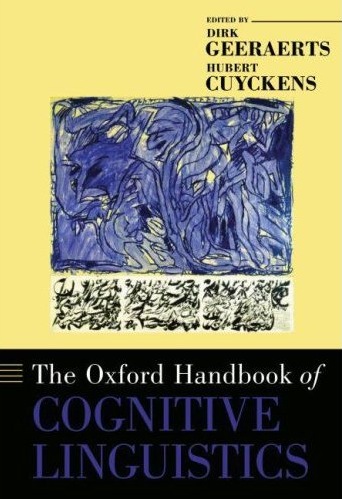 Turner, Mark. 2007. "Conceptual Integration" in The Oxford Handbook of Cognitive Linguistics. Edited by Dirk Geeraerts
and Hubert Cuyckens. Oxford: Oxford University Press, 2007.
Turner, Mark. 2007. "Conceptual Integration" in The Oxford Handbook of Cognitive Linguistics. Edited by Dirk Geeraerts
and Hubert Cuyckens. Oxford: Oxford University Press, 2007.
 Turner,
Mark. 2008. "The Way We Imagine." In Ilona Roth, editor,
Imaginative
Minds. Proceedings
of the British Academy. London: Oxford University Press &
the British Academy. Pdf
of draft. Turner,
Mark. 2008. "The Way We Imagine." In Ilona Roth, editor,
Imaginative
Minds. Proceedings
of the British Academy. London: Oxford University Press &
the British Academy. Pdf
of draft.
- Turner, Mark. 2002.
"The Cognitive Study of Art, Language, and Literature." Poetics
Today. 23:1, pages 9-20.
- Turner, Mark. "Forbidden
Fruit."
Sixth International Cognitive Linguistics Conference. Stockholm,
July.
-
Turner, Mark . 1999. "Forging Connections." Computation
for Metaphor, Analogy, and Agents. Edited by Chrystopher
Nehaniv. Berlin: Springer-Verlag, pages 11-26. A volume in the series
Lecture Notes in Artificial Intelligence.
- Turner. 2000.
"Backstage Cognition in Reason and Choice." In Arthur Lupia,
Mathew McCubbins, and Samuel L. Popkin, editors, Elements
of Reason: Cognition, Choice, and the Bounds of Rationality.
Cambridge: Cambridge University Press, 2000. Pages 264-286.
-
Turner, Mark . 1996. "Conceptual Blending and Counterfactual
Argument in the Social and Behavioral Sciences," in Philip Tetlock
and Aaron Belkin, editors,
Counterfactual Thought Experiments in World Politics.
Princeton, N.J.: Princeton University Press. pages 291-295.
- Turner, Mark, Maíra Avelar, & Milene Mendes de Oliveira. 2019. "Blended Classic Joint Attention and Multimodal Deixis." Signo. 44:79, pages 03-09.
-
Turner, Mark and Gilles
Fauconnier . 1999. "A Mechanism
of Creativity." Poetics Today. Volume 20, number 3, pages
397-418. Reprinted as "Life on Mars: Language and the Instruments
of Invention." In The
Workings of Language, edited by Rebecca Wheeler. Praeger,
1999. Pages 181-200. CSN version.
- Turner and Fauconnier.
1999. "Miscele e metafore." Pluriverso: Biblioteca delle idee
per la civiltà planetaria 3:3 (September 1999), 92-106.
[Translation by Anna Maria Thornton.]
- Turner and Fauconnier.
1998. "Conceptual Integration in counterfactuals." Discourse
and Cognition. Edited by Jean-Pierre Koenig. Stanford: Center
for the Study of Language and Information (CSLI), 285-296 [distributed
by Cambridge University Press].
- Turner and Fauconnier.
2000. "Metaphor, Metonymy, and Binding."
In Metonymy and Metaphor at the Crossroads. Edited by Antonio
Barcelona. Berlin and New York: Mouton de Gruyter. Pages 133-145.
A volume in the series Topics in English Linguistics.
- Turner and Fauconnier.
1995.
"Conceptual Integration and Formal Expression." Metaphor
and Symbolic Activity, 10:3, 183-203.
- Veale, Tony. 1999.
"Pragmatic Forces in Metaphor Use: The Mechanics of Blend Recruitment
in Visual Metaphors." In Computation
for Metaphor, Analogy, and Agents. Edited by Chrystopher
Nehaniv. Berlin: Springer-Verlag, pages 37-51. A volume in the series
Lecture Notes in Artificial Intelligence.
-
Veale, Tony . 1996 manuscript.
Pastiche: A Metaphor-centred Computational Model of Conceptual
Blending, with special reference to Cinematic Borrowing.
- Veale, Tony and Diarmuid
O'Donogue. 1999. "Computational Models of Conceptual Integration."
Sixth
International Cognitive Linguistics Conference. Stockholm, July.
- Vorobyova, Olga. "Conceptual
blending in narrative suspense: Making the pain of anxiety sweet."
7th International Cognitive Linguistics Conference, July 2001.
- Wilson, Anna. 2020. It’s time to do news again. Zeitschrift für Anglistik und Amerikanistik, 68:4. Special Issue: Multimodal Research in Linguistics. Guest Editor: Peter Uhrig. 379-409.
- Winter, Steven. 2012. Frame Semantics and the 'Internal Point of View,' Current Legal Issues Colloquium: Law and Language (Michael Freeman & Fiona Smith eds.) Oxford University Press. [Frame blending in conceptions of the law.]
- Worth, Aaron. “’Thinketh: Browning and Other Minds,” Victorian Poetry 50:2, pp.127-146 (Summer 2012) http://muse.jhu.edu/journals/victorian_poetry/v050/50.2.worth.html
- Yang, Fanpei Gloria, Kailyn Bradley, Madiha Huq, Dai-lin Wu, Daniel C. Krawczyk. 2013. "Contextual effects on conceptual blending in metaphors: An event-related potential study." Journal of Neurolinguistics. 03/2013; 26(2):312-326. DOI:10.1016/j.jneuroling.2012.10.004. "The results suggest that the demands of conceptual reanalysis are associated with conceptual mapping and incongruity in both literal and metaphorical language, which supports the position of blending theory that there is a shared mechanism for both metaphoric and literal language comprehension."
-
Zbikowski, Lawrence.
(Web page:
http://humanities.uchicago.edu/faculty/zbikowski/)
1997.
"Conceptual blending and song." Manuscript.
1999. "The blossoms of 'Trockne Blumen': Music and text in the early
nineteenth century," Music Analysis 18/3 (October 1999):
307-345.
Zbikowski offers a
seminar on conceptual mapping and blending in song and a related
seminar on conceptual blending in language, music, and song.
- Zunshine, Lisa.
Domain Specificity and Conceptual Blending in A.L. Barbauld's Hymns
Materials accompanying
some talks by Fauconnier or Turner
LSA Summer Institute, Berkeley, July 2009.
- Further information for participants.
Autonomy, Singularity, Creativity. The National Humanities Center.
November, 2006. [pdf]
The following handouts
are in RTF format.
UC Berkeley Cognitive Science Students Association,
November 1999.
Istituto Trentino di Cultura (ITC), Istituto
per la Ricerca Scientifica e Tecnologica (IRST)
June 1997, Povo, Trento, Italy.
UCSD Colloquium on Political Reasoning
June, 1996, San Diego.
Second Conference on Conceptual Structure,
Discourse, and Language, 1 April, 1996, Buffalo.
Second Conference on Conceptual Structure,
Discourse, and Language, 2 April, 1996, Buffalo.
Theory Group
February, 1996, Maryland.
UCB/UCSD 1996 Cognitive Linguistics Workshop
January, 1996, Berkeley.
Fourth International Conference on Cognitive
Linguistics
July, 1995, Albuquerque.
Conference on Conceptual Structure, Discourse,
and Language
November, 1994, UCSD.
UCB/UCSD 1993 Cognitive Linguistics Workshop
October, 1993, UCSD.
There is also work
in progress on blending in ASL (Scott Liddell), blending with material
anchors (Ed Hutchins), and blending in impersonal SE constructions
(Ricardo Maldonado). Joseph
Goguen and his students have devised an interesting mathematical
approach to integration operations, using algebra of categories
(See The Semiotic
Zoo), and there is some modeling being done (ICSI, and Nanterre).
Other links
|


 Springer. "This book uses blending theory in math cognition, and assesses the main aspect of this theory, called image schema theory. Applied work in math pedagogy has used this theory, but no work has assessed its validity. This book provides an overall assessment of the theory with regard to its validity in the study of math cognition. Overall, this book presents image schema theory as it has evolved today to mathematicians, cognitive scientists, and math educators, deriving from it any concrete implications for modeling math in computer science and, on the other side, for making math pedagogy more effective."
 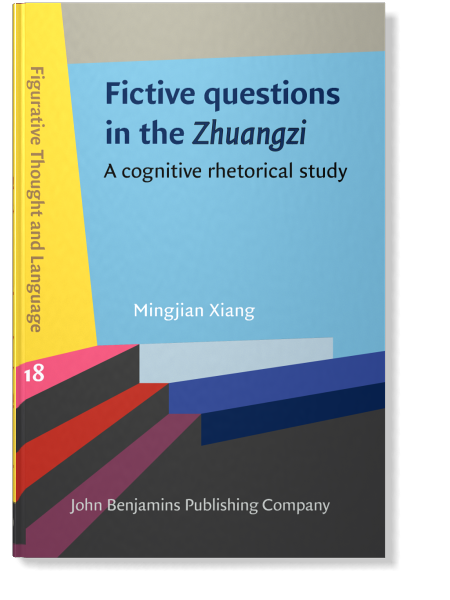 Xiang, Mingjian. Forthcoming.



 Oakley, Todd & Anders Hougaard, editors. 2008.