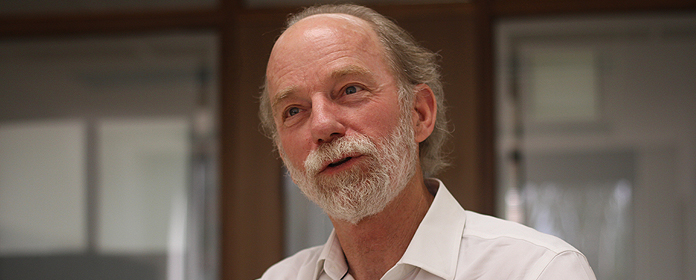
Mark Turner is Institute Professor and Professor of Cognitive Science at Case Western Reserve University
 Doctor Honoris Causa, Université de Haute-Alsace. Before joining the faculty at Case, he was Distinguished University Professor at the University of Maryland and Associate Director of the Center for Advanced Study in the Behavioral Sciences at Stanford. He is Founding Director of the Cognitive
Science Network; Co-Director of the Red Hen Lab™; winner of the Anneliese Maier Research Prize from the Alexander von Humboldt Foundation; winner of the Prix du Rayonnement de la langue et de la littérature françaises from the French Academy; Founding President of the Myrifield
Institute for Cognition and the Arts; Fellow of the Institute for Advanced Study, the Center for Advanced Study in the Behavioral Sciences, the National Humanities Center, the John Simon Guggenheim Memorial Foundation, the Institute of Advanced Study at Durham University, the Centre for Advanced Study at the Norwegian Academy of Science and Letters, the New England Institute for Cognitive Science and Evolutionary Psychology, the National Endowment for the Humanities, and the Institute for the Science of Origins; Extraordinary Member of the Humanwissenschaftliches
Zentrum der Ludwig-Maximilians-Universität; External Research Professor of the Krasnow Institute for Advanced Study; Visting Scholar, Department of Linguistics, Stanford; Visiting Scholar, Departments of Cognitive Science and Linguistics, UCSD; Distinguished Visiting Professor at Hunan Normal University.
Doctor Honoris Causa, Université de Haute-Alsace. Before joining the faculty at Case, he was Distinguished University Professor at the University of Maryland and Associate Director of the Center for Advanced Study in the Behavioral Sciences at Stanford. He is Founding Director of the Cognitive
Science Network; Co-Director of the Red Hen Lab™; winner of the Anneliese Maier Research Prize from the Alexander von Humboldt Foundation; winner of the Prix du Rayonnement de la langue et de la littérature françaises from the French Academy; Founding President of the Myrifield
Institute for Cognition and the Arts; Fellow of the Institute for Advanced Study, the Center for Advanced Study in the Behavioral Sciences, the National Humanities Center, the John Simon Guggenheim Memorial Foundation, the Institute of Advanced Study at Durham University, the Centre for Advanced Study at the Norwegian Academy of Science and Letters, the New England Institute for Cognitive Science and Evolutionary Psychology, the National Endowment for the Humanities, and the Institute for the Science of Origins; Extraordinary Member of the Humanwissenschaftliches
Zentrum der Ludwig-Maximilians-Universität; External Research Professor of the Krasnow Institute for Advanced Study; Visting Scholar, Department of Linguistics, Stanford; Visiting Scholar, Departments of Cognitive Science and Linguistics, UCSD; Distinguished Visiting Professor at Hunan Normal University.

 Orcid ID 0000-0002-2089-5978
2024-04-18. The Red Hen Audio Tagger
Publicly available, open source: RHAT uses deep learning to tag audio elements frame by frame, generating metadata tags that can be utilized in various data formats for analysis. Seamless integration with ELAN. https://doi.org/10.1515/lingvan-2022-0130.2024-02-22. The Distributed Little Red Hen Lab™ wins its tenth consecutive Google Summer of Code award


Apply! Code the summer away. Achieve ultimate glory. And get a nice paycheck! See the Ideas Page.
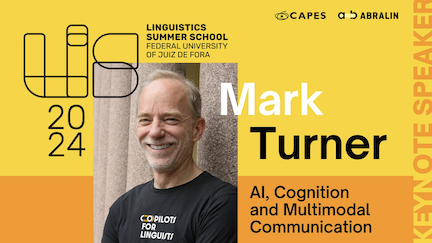
Join us for the Linguistics Summer School, 11-15 March 2024, a free online event featuring keynote presentations and courses. Register at
https://www2.ufjf.br/ppglinguistica-en/lis-2024/.
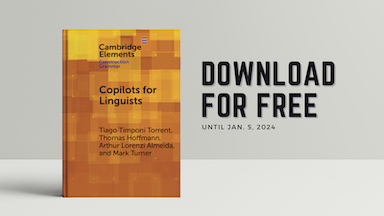
Copilots for Linguists: AI, Constructions, and Frames
Available now from Cambridge University Press. Free download until 5 January 2024.
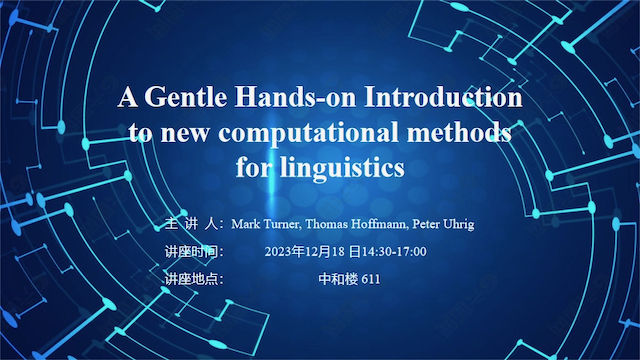
2023-12-18: Join us for the ICMC2023 workshop
2023-12-16: Join us online for the Conference on AI and Multimodal Communication
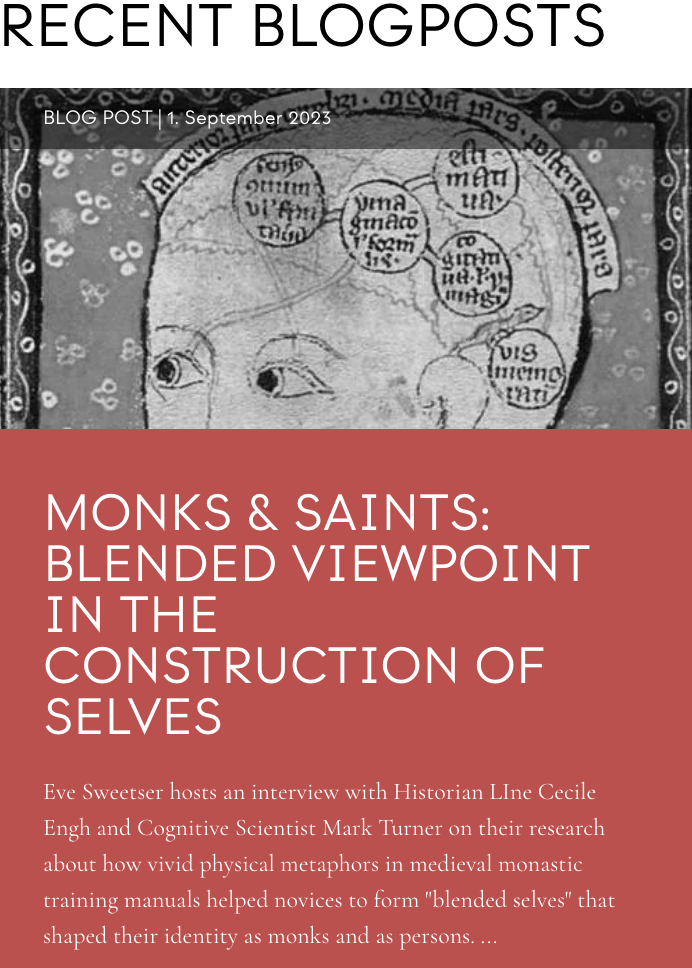
2023-09-01. Eve Sweetser, Line Cecile Engh, and Mark Turner. “Monks and Saints: Blended Viewpoint in the Construction of Selves.” Blogpost, Diegesis in Mind.
2023-08-08. Tiago Torrent, Arthur Lorenzi, Thomas Hoffmann, and Mark Turner. “Copilots for Frame Semanticists: AI, Constructions, and Frames”. Talk at the International FrameNet Workshop
2023-08-07. Tiago Torrent and Mark Turner. “Persistence of the Base.” Talk at ICLC16, in the session on the legacy of Gilles Fauconnier
2023-07-06. “Mental Spaces and Conceptual Integration: An interview on the legacy of Gilles Fauconnier.”
2023-02-14. “How did education get this way, and can Cognitive Science give us a path forward?” Center for Cognitive Science, University of Zagreb.
2022-12-26. In Linguistics Vanguard:
The Red Hen Anonymizer and the Red Hen Protocol for De-Identifying Audiovisual Recordings
ICMC2022: The 2022 International Conference on Multimodal Communication
YouTube: Mark Turner, "Red Hen Lab: An overview of big data science methods for the study of multimodal communication." International Seminar on Language, Culture, and Cognition.
Monday 7 November 2022, 10am Eastern, 9am Mexico City, 4pm CET, 3pm UTC.
ICMC2022: The 2022 International Conference on Multimodal Communication
YouTube: Mark Turner, "Red Hen Lab: An overview of big data science methods for the study of multimodal communication." International Seminar on Language, Culture, and Cognition.
Monday 7 November 2022, 10am Eastern, 9am Mexico City, 4pm CET, 3pm UTC.
2022-09-16, 5pm EDT, 6pm BRT. "The Origin of Creativity." 2022 XIII International Brazilian Conference on Cognitive Science.
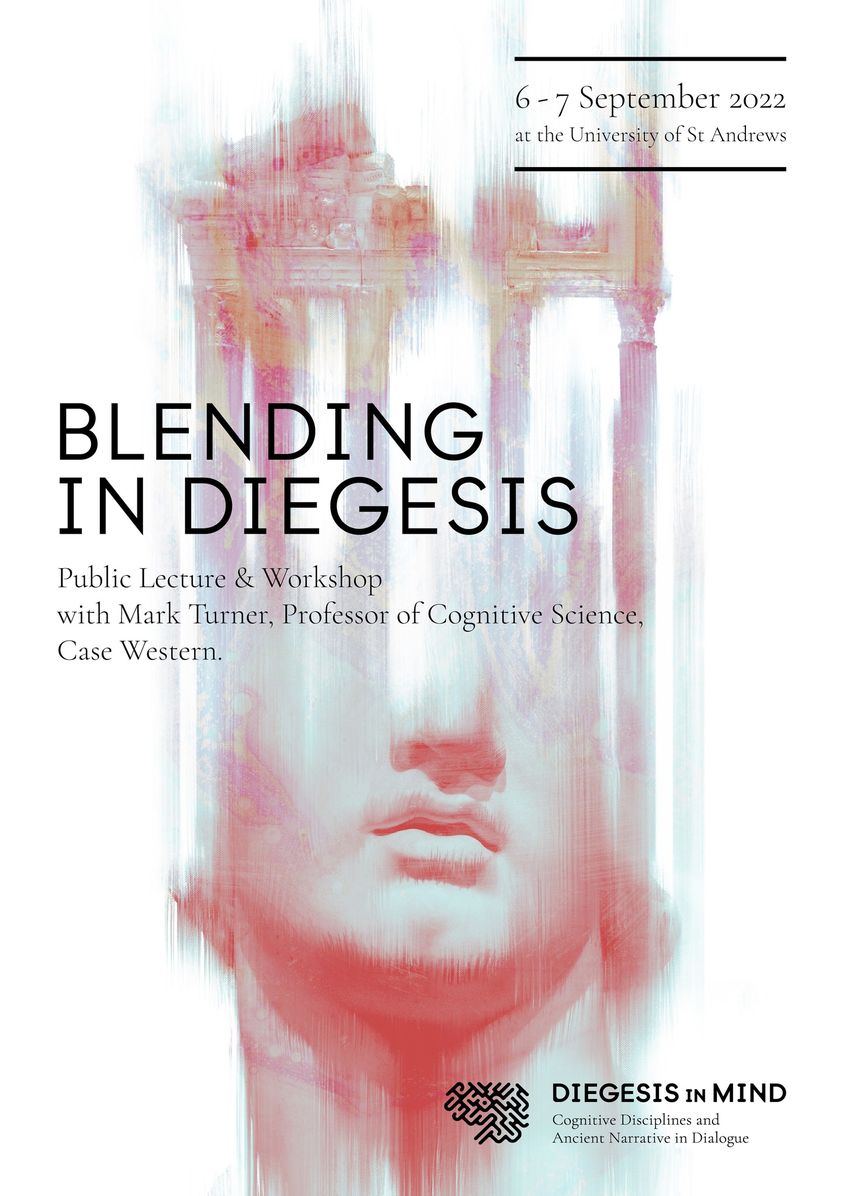
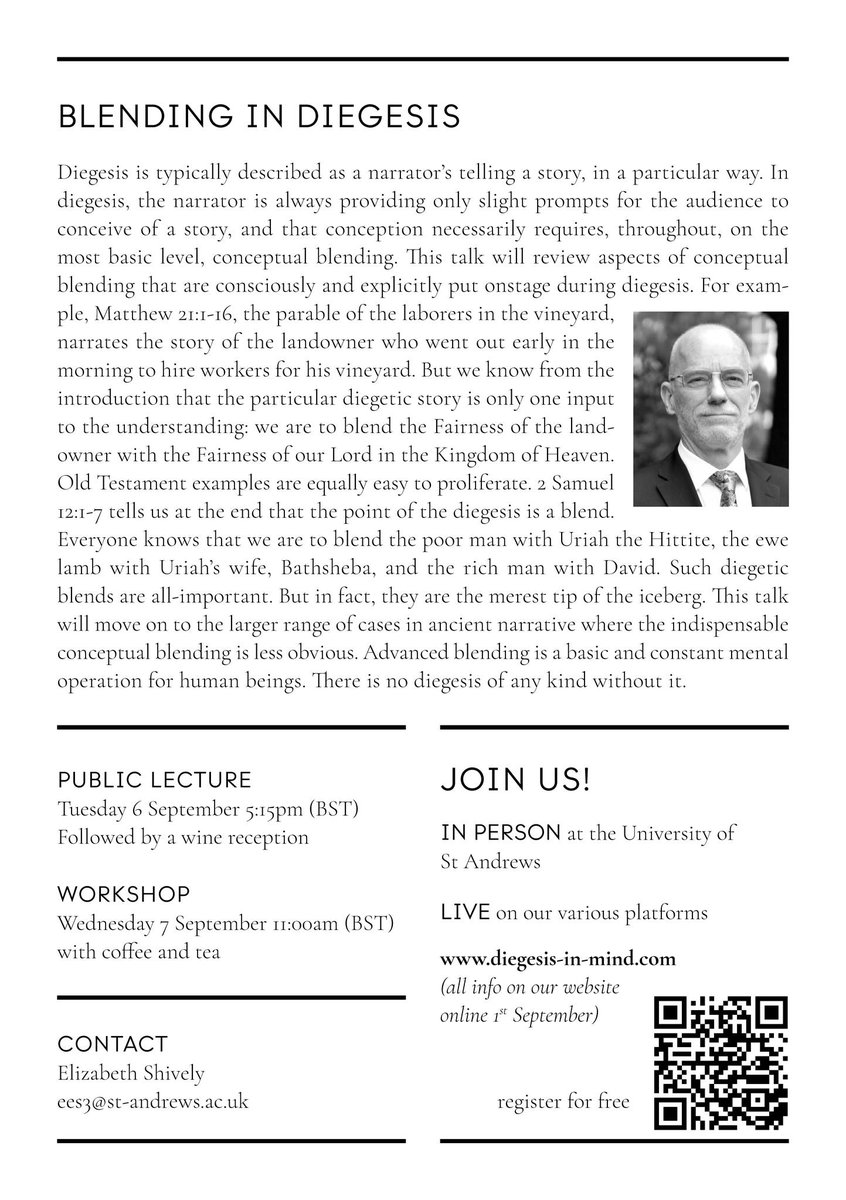
2022-09-06. 5:15pm BST. "Blending in Diegesis." Download the slideshow pdf. Keynote for the speaker series Diegesis in Mind. View the recording.
2022-07-20. Data Science Methods for the Study of Co-Speech Gesture
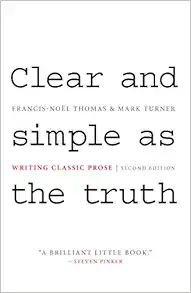
Symposium at the 9th Conference of the International Society for Gesture Studies. View the Recording.2022-03-19, noon UTC. View "The Cognitive Science of Writing," from the online book launch of the Chinese translation of Clear and Simple as the Truth: Writing Classic Prose.
Recordings: Lecture Only, with Chinese interpretation. Full Version, including introduction and Q&A, with Chinese interpretation.

2022-03-07. The Distributed Little Red Hen Lab™ wins its eighth consecutive Google Summer of Code award
Apply! Code the summer away. Achieve ultimate glory. And get a nice paycheck! See the Ideas Page
Friday, Saturday, Sunday, 10-12 December 2021. 2021 International Conference on Multimodal Communication
Streamed live and recorded. See the instructions to join us online free.
2021-11-11. "Cognitive Processes for the Fluid Construction of Selves"
11:30-13:30 EST, 17:30-19:30 CET. International Conference on Narrative Engagement. Online.
Streamed live. Free to those who
register.
2021-11-05. "The Red Hen Anonymizer and the Case Protocol for De-Identifying Audiovisual Recordings"
4-5pm UK Time, noon-1pm EDT. International Multimodal Communication Centre, University of Oxford. Online. Streamed live. Free to those who subscribe.
Advances in science often depend upon great ranges of data. If machine learning is the rocket, data are the fuel. In genomics, astrophysics, materials science, energy, and many other fields, science is improving because of new methods for amassing, wrangling, and sharing data. But researchers who study advanced higher-order human cognition are often stopped from sharing various kinds of data because of concerns about privacy. Researchers have boilerplate systems for cybersecurity —systems like Box, guides to DFARS compliance, etc.—so that the original data are shared with only those who are authorized to view it. Researchers also have boilerplate expectations for de-identifying text, such as eliminating columns of information from the csv files that result from computer-mediated behavioral experiments or surveys. But we have no established policy for sharing de-identified audiovisual recordings. Just now, science has invented new technology that lets researchers de-identify both voice and appearance, and produce JSON output indicating bodypose and face and hand keypoints in numerical form, suitable for computer search, machine learning, etc. The Red Hen Anonymizer is a new tool for de-identification. We introduce it and present its features. We also introduce the guidelines that have been established by the Case Western Reserve University Institutional Review Board (IRB) for its use. Those guidelines are referred to as “the Case Protocol for Audiovisual Recordings.”
2021-09-26. "Imagining Our Futures" and "Medieval Cognitive Engineering"
3:15-4pm London Time or 10:15-11am EDT & 6:15-8:30pm London Time or 1:15-3:30pm EDT.
Streamed live. Free to those who
register.

2021-09-14. “Blending to Create Human-Robot Common Ground.” Summit of the International Society for the Study of Information. Durham, North Carolina.
2021-07-26. Conceptual Blending Theory at CogSci2021
“Conceptual Blending in Animal Cognition: A Comparative Approach.” A symposium of the annual conference of the Cognitive Science Society, on Comparative Cognition—Animal Minds, 26-29 July 2021, Vienna. “We bring together a diverse group of researchers to discuss human-unique cognitive abilities through the lens of CBT (Conceptual Blending Theory). Turner introduces CBT and outlines the cross-species cline of conceptual blending. Pelkey provides evidence for various types of blends in bats and discusses the conclusions of these analyses. Leonardis, Semenuks, and Coulson emphasize the importance of taking non-human perspectives in analyzing behaviors with CBT. Adachi discusses work on metaphorical and cross-modal mapping in primates. Forster serves as the moderator.” Mark Turner's talk: Blending in Animal Cognition.2021-05-14. 11am-2pm EDT. Symposium on the Transdisciplinary University of the Future
Third International Conference on Transdisciplinarity2021-02-24, 3pm Eastern Time. Data Science Colloquium: Wenyue Xi and Mark Turner. Data Science for FrameNet and Frame Blends
View the recording2020-12-12&13, China Standard Time. Free conference: 2020 International Conference on Intercultural Multimodal Communication
Click here to view the recorded talks.
2020-11-25, 7pm GMT-6. Story, Projection, and Parable: The Fabric of Meaning
Distinguished Lecture at the Universidad Nacional Autónoma de México
2020-10-26, 1:30-3pm Eastern Time.
Book Launch for Approaches to the Medieval Self, including Eriksen & Turner, “Cognitive Approaches to Old Norse Literature.” Register to attend virtually.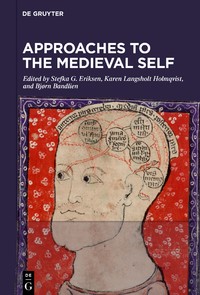
2020-07-23. Blending Stories and Frames in Imagining Our Futures
A talk webcast from GELP-COLIN. The talk is in English.
A talk webcast from the Brazilian Linguistics Association
A talk at IMCC, the Oxford International Multimodal Communication Centre. Click here to view the talk.
Students: Propose a project. Code the summer away. Achieve ultimate glory. And get a nice paycheck! See the Ideas Page
2020-06-28.
Conceptual Blending as a Central Process of Grammar, Language, and Communication
2020-05-20. Aspects of multimodal communication in our distributed imagining
of our futures

2020-02-20.
The Distributed Little Red Hen Lab™ wins its sixth consecutive Google Summer of Code award

2020-02-20
Lexmark India Tech Talk: Big Data Science for Speech Recognition

2020-01-16
Data
Science Colloquium
Big Data Science for Multimodal Communication—An Overview of the International Distributed Little
Red Hen Lab.
View recording.
4-7 January 2020
Imagining
Our Futures
A Free Public Lecture Series. Hunan
Normal University.
2019-07-01. Thinking Ahead: Neuroscience and the Future of the Humanities. The 2018 Lisbon Consortium.
2019-06-07. The Central Problem of Language: A Construction Grammar Theory of Creativity
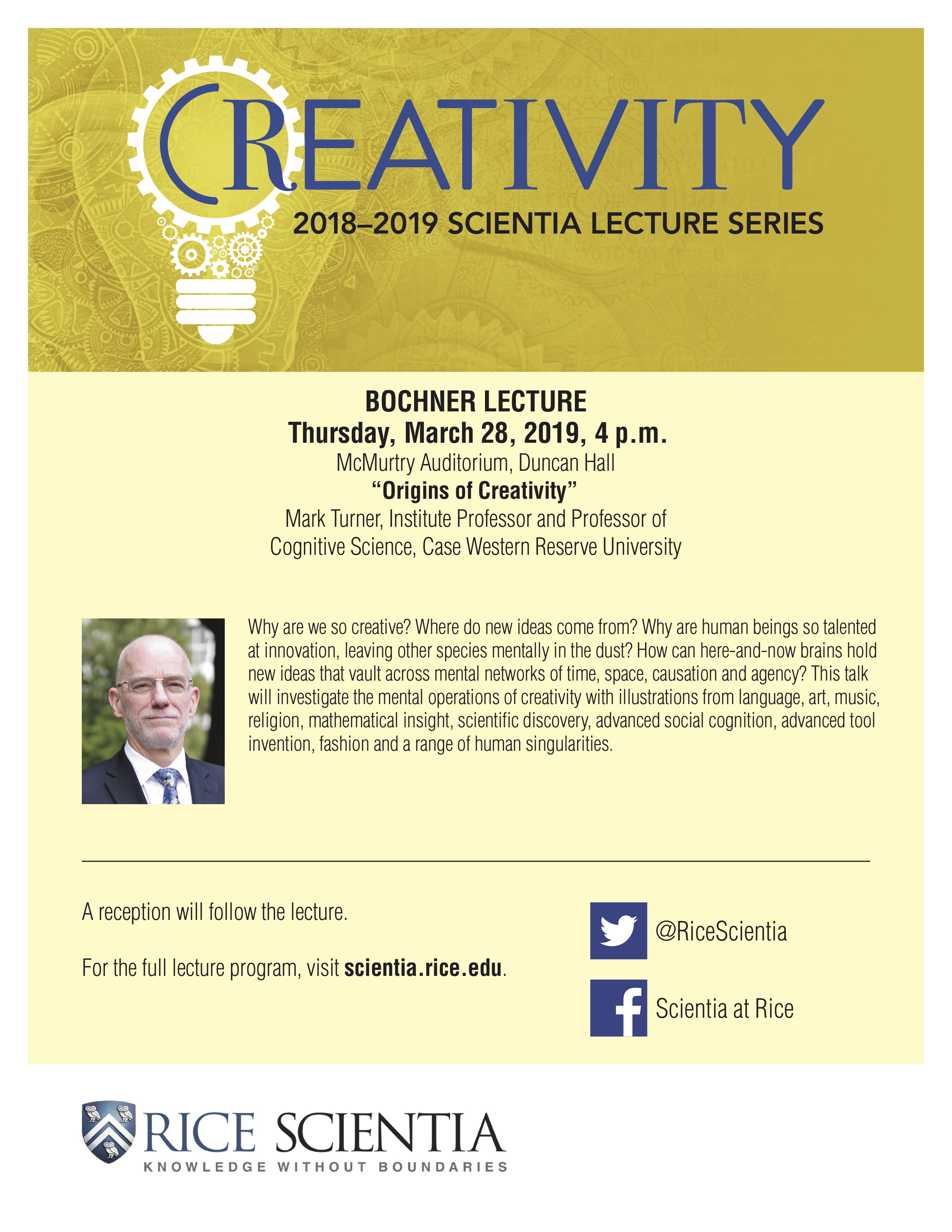
AFLiCo8: Language, Cognition, Creativity2019-03-28.
Salomon Bochner Lecture, Rice University

2019-03-01.
Just published: Korean translation of The Origin of Ideas, from Kyungpook National University Press.

2019-02-26. Blended Classic Joint Attention and Multimodal Deixis
Turner, Mark, Maíra Avelar, & Milene Mendes de Oliveira. Signo 44:79, pages 03-09.2019-02-26. The Distributed Little Red Hen Lab™ wins its fifth Google Summer of Code award in a row.
Students: Propose a project. Code the summer away. Achieve ultimate glory. And get a nice paycheck! See the Ideas Page
2019-01-05. Lecture Series: Research Methods in Multimodal Communication
2018-12-17. Seminar on Cognitive Analysis of Prose Style
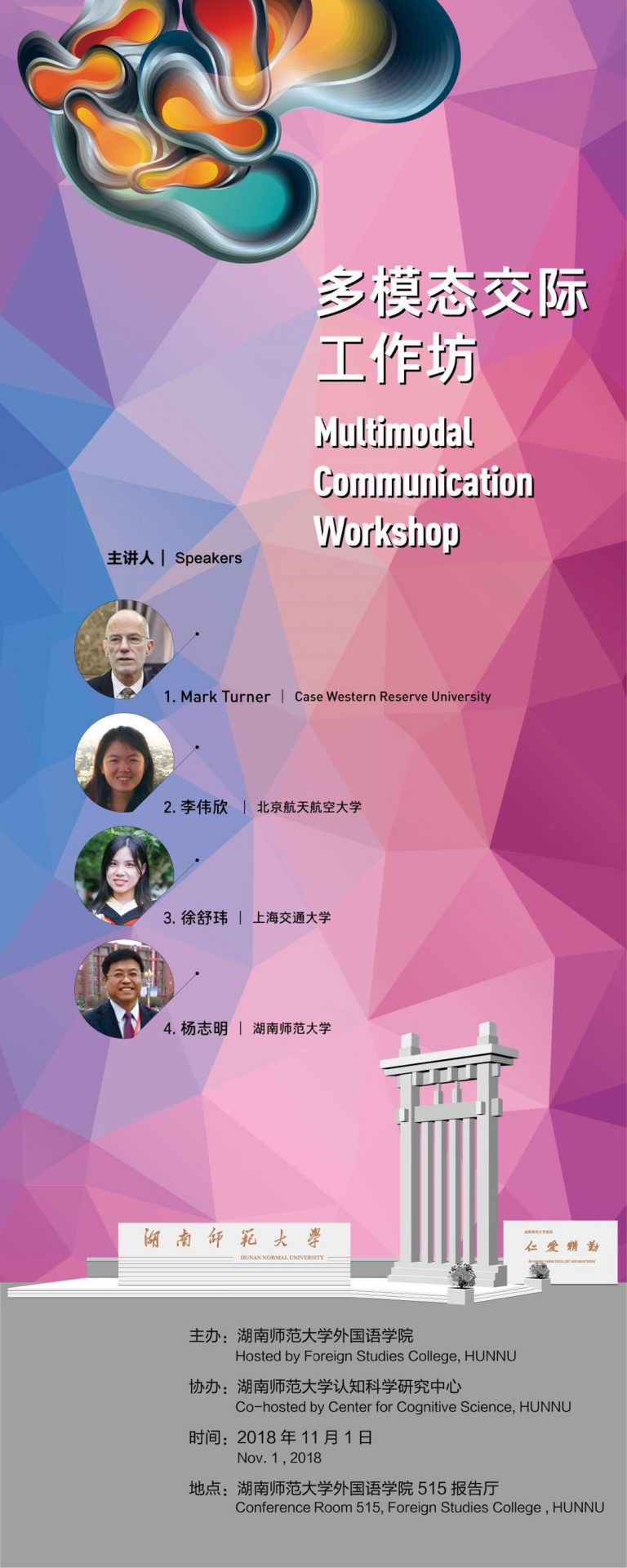
2018-11-01. International Conference on Multimodal Communication 2018

2018-10-24. Concept Invention
Foreword and Preface to Concept Invention: Foundations, Implementation, Social Aspects, and Applications. Springer, 2018. A volume in the series Computational Synthesis and Creative Systems.2018-10-22. "Cognitive Perspectives"
An interdisciplinary seminar for PhD students within the fields of the Humanities, Theology, and Law, October 22-26, 2018. Trondheim, Norway.2018-09-07. Construction Grammar under Construction
Talk at the UT Austin Linguistics Research Center.2018-06-11. Video of "Big Data Tools for Research on Narrative and Blending"
Cognitive and Empirical Methods, RWTH Aachen.2018-06-01. Advances in Conceptual Blending
Fifth Neurohumanities Conference. University of Catania. 31 May - 1 June 2018.2018-03-15. Connecting the Dots: From Linguistics to Literature to Cultural Studies.
2018-03-13. The Big Data Turn in Linguistics.
2018-03-13. Blending and Language.
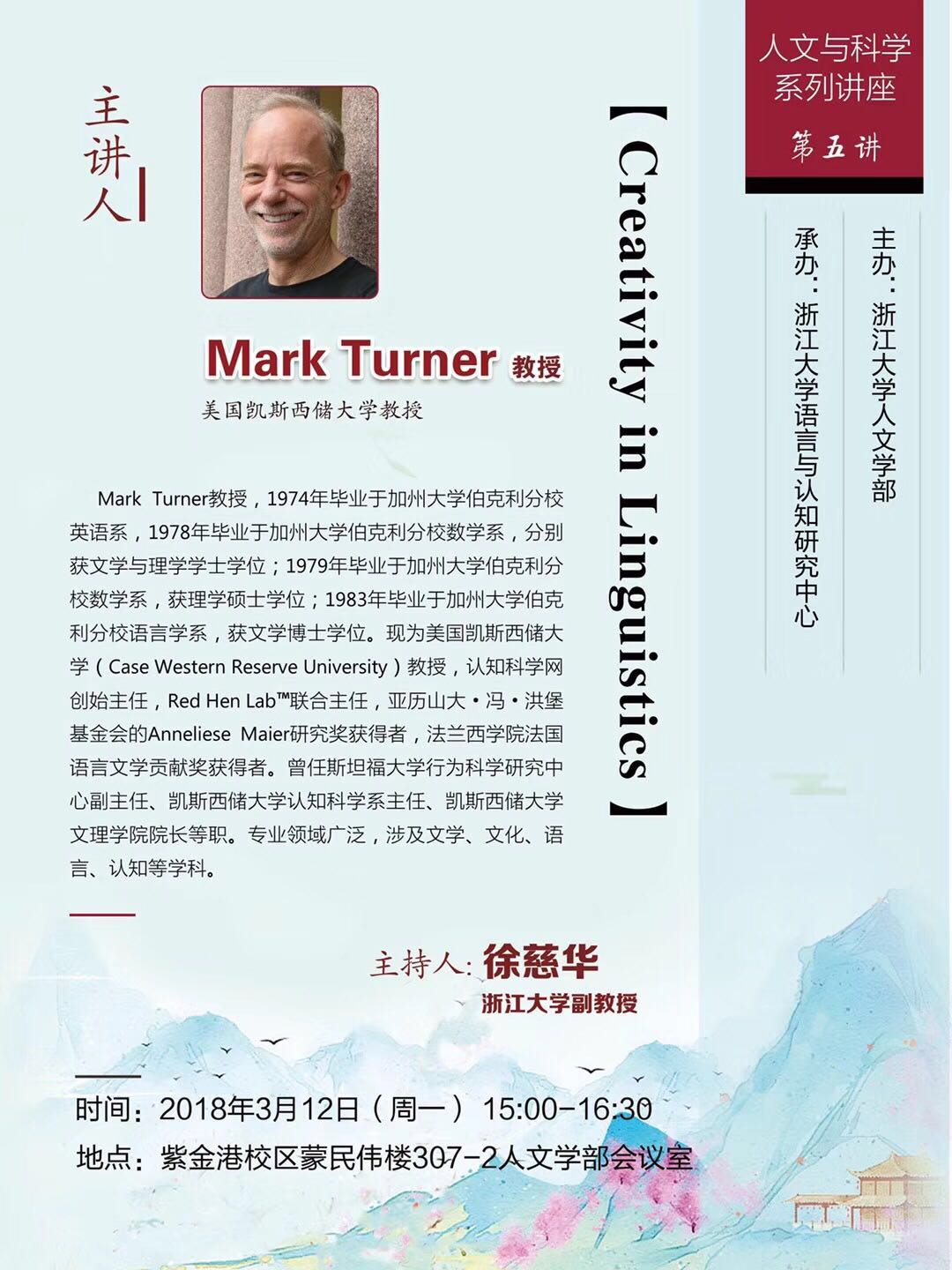
2018-03-12. Creativity in Language.
2018-03-03. Big Data Science as a Diversity Tool for the Humanities and Social Sciences.
Purdue Linguistics, Literature, and Second Language Studies Conference.2018-02-24. A Tour of Basic Mental Tools for Learning a Human Language.
Symposium on Interdisciplinary Approaches to East Asian Languages Pedagogy. The Ohio State University.2018-02-13. The Distributed Little Red Hen Lab™ wins a Google Summer of Code 2018 award.
Fourth time in a row. Students: Propose a project. Code the summer away. Achieve ultimate glory. And get a nice paycheck! See the Ideas Page
2018-01-24, 9am-5pm.
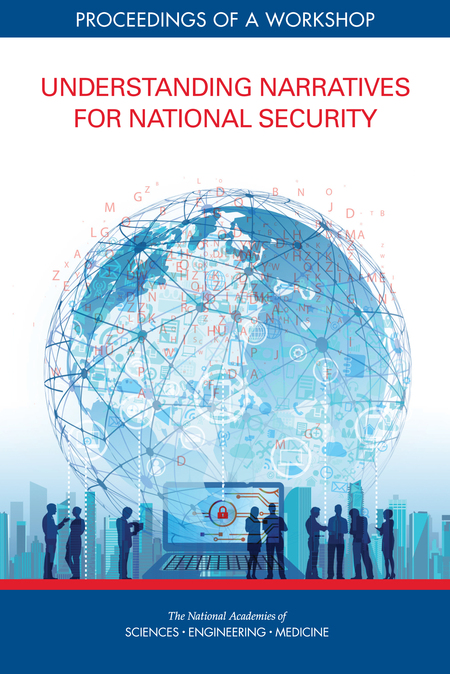
Watch the webcast of Understanding Narratives for National Security Purposes from the National Academy of Sciences
2018-01-06 Hunan Normal University establishes a Center for Cognitive Science
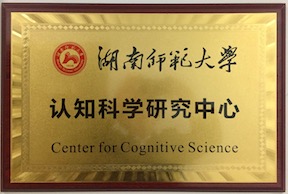
2018-12-04 Lecture Series on Creativity. 6-9 January 2018. Hunan Normal University
1: Introduction—The Origins of Human Creativity. 2: Creativity in language. 3: Creativity in literature. 4: Workshop: New computational tools for research in multimodal creativity. 5: Creativity in communication.2017-11-20 Cognitive Linguistics Conference in Wrocław 2 December 2017.
2017-10-20 Red Hen Lab at the Netherlandish Institute of Advanced Study
2017-09-22 Red Hen Lab, in the German AI journal Künstliche Intelligenz
2017-07-04 Apply for a Ph.D. fellowship in Cognition & Poetics. Application Deadline: 1 September 2017.
This is the second fellowship to be funded by Mark Turner's Anneliese-Maier Research Prize from the Alexander von Humboldt Foundation.
2017-05-18.
Cognitive Neuroscientific Models of Decision Making. Duke University.
2017-04-27.
Viewpoint Blending in International Media. University of Oxford.
2017-04-20.
Hanse-Lecture in Neuroscience am Hanse-Wissenschaftskolleg
2017-02-27. The Distributed Little Red Hen Lab™ wins a Google Summer of Code 2017 award.
2017-04-20.
Hanse-Lecture in Neuroscience am Hanse-Wissenschaftskolleg
2017-02-27. The Distributed Little Red Hen Lab™ wins a Google Summer of Code 2017 award.
Third time in a row. Students: Propose a project. Code the summer away. Achieve ultimate glory. And get a nice paycheck! See the Ideas Page

2017-01-03. International Conference on Multimodal Communication 2017
Registration opens 15 March 20172016-10-21.“Narrative Compressions in Mathematics and Science.” Symposium on Narrative, Cognition, & Science. Friedrich-Alexander University. 21 October 2016.
2016-09-19. "New neuroscience as a guide for new computational creativity." Center for Interdisciplinary Research, University of Bielefeld.
2016-05-26 "Brains and Selves." The Third Neurohumanities Conference.
2016-05-25 Submit an abstract to The 2017 International Conference on Multimodal Communication. 9-11 June 2017
2016-02-29 The Distributed Little Red Hen Lab™ wins a Google Summer of Code 2016 grant
Students: Propose a project. Code the summer away. Achieve ultimate glory. And get a nice paycheck! See the Ideas Page.2015-11-16 Apply for a Ph.D. fellowship in Cognition & Poetics. Application Deadline: 15 January 2016.
2015-05-14 Interview on Human Creativity. Institute of Culture and Society
2015-05-13 Against Game Theory
People make choices. Often, the outcome depends on choices other people make. What mental steps do people go through when making such choices? Game theory, the most influential model of choice in economics and the social sciences, offers an answer, one based on games of strategy like chess and checkers: the chooser considers the choices that others will make and makes a choice that will lead to a better outcome for the chooser, given all those choices by other people. It is universally established in the social sciences that classical game theory (even when heavily modified) is bad at predicting behavior. But instead of abandoning classical game theory, various social scientists have mounted an ambitious and energetic rescue operation under the name of “behavioral game theory.” Its main tool is to propose systematic deviations from the predictions of game theory, such as deviations that arise from character type. Other deviations purportedly come from cognitive overload or limitations. The fundamental idea of behavioral game theory is that, if we know the deviations, then we can correct our predictions accordingly, and so get it right. There are two problems with this rescue operation, each fatal. (1) For a chooser, contemplating the range of possible deviations, as there are many dozens, actually makes it exponentially harder to calculate a path to an outcome. This makes the theoretical models unsuited to modeling human thought or human behavior in general. (2) Modeling deviations is helpful only if the deviations are consistent, so that scientists (and decision-makers) can make predictions about future choices on the basis of past choices. But the deviations are not consistent. In general, deviations from classical models are not consistent for any individual from one task to the next or between individuals for the same task. In addition, people’s beliefs are in general not consistent with their choices. Accordingly, there is no available path for constructing a general behavioral game theory. What can replace it? We survey some of the emerging candidates. More.2015-03-02 The Distributed Little Red Hen Lab™ wins a Google Summer of Code 2015 grant
Students: Propose a project. Code the summer away. Achieve ultimate glory. And get a nice paycheck! See the Ideas Page.2015-01-29 Anneliese Maier Research Prize awarded to Mark Turner by the Alexander von Humboldt Foundation to support his research over the next five years
"What is it that makes humans into forward-looking thinkers, constantly generating new ideas? For decades, the American cognitive scientist, Mark Turner, has been coming up with ways of approaching these questions that have gained him international recognition. As one of the founding fathers of conceptual integration and blending, for example, he has helped explain how humans are able to combine differing, sometimes contradictory thoughts and ideas within a very short time. Researchers in many different fields, from linguistics and literary studies to psychology, politics and artificial intelligence, draw on Mark Turner’s work."2015-01-22 Attend the Marshack Lecture on The Origin of Mathematical Ideas at UCLA

2014-05-22 Read the Psychology Today piece on The Origin of Ideas.
2014-05-07 Hear the Australian Broadcasting Corporation interview on The Origin of Ideas.
2014-03-22 Read the Brain World Magazine piece on The Origin of Ideas.
2014-02-28 Read the New Scientist piece on The Origin of Ideas.
2014-01-21 BBC Radio Interview
The Origin of Ideas The Book Talk
Why are we so innovative? Where do new ideas come from? Why are human beings so exceptionally good at innovation, leaving other species mentally in the dust? How can we hold on to new ideas once they are formed? This book explores the claim that the human spark, the source of innovation and the origin of ideas, was an advance that occurred in a particular kind of mental operation, which Turner calls “blending.” View the book talk.
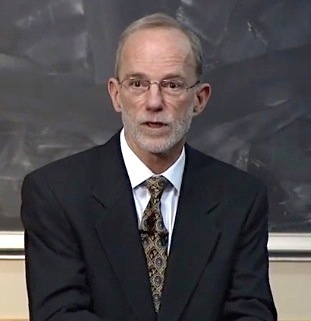
2014-05-14. Blending as a blessing and a curse. Australian National Broadcasting program.
2014-04-09. Blending, neural reuse, and frontiers in human neuroscience
“Advanced blending underlies all manifestations of mapping, including metaphor, which is just one more surface product of this species-defining capacity for integrating disparate mental components into new, meaningful wholes. The human brain is a bubble chamber of mental spaces, constantly building new integration networks, and a culture is an even larger bubble chamber. Just like evolution—and neural reuse—, blending is opportunistic: it reuses whatever is functionally suitable, right there and then. As it happens with the natural selection of living organisms, the process of trial and error in conceptual and neural reuse never stops. Through it, minds and cultures select the few integrations that are really useful, anchor them by means of symbolic procedures, and pass them on to the next generation. To become productive habits, both generic templates of conceptual integration and patterns of neural reuse need to find an adequate niche within the general system. In blending as in neural reuse, a given item, once identified as potentially useful, is integrated into the network under construction. If necessary and possible, the item is adjusted for optimization in its new function. If it works, the item is kept in the network, although it still remains available for its older functions. Networks and their components are discarded and entrenched in a dynamic, extremely agile process. Blending, just like neural reuse, is not direct transfer, but the construction of a new whole with old pieces.” Read the article in Frontiers in Human Neuroscience.2014-02-28: Learning to Learn Online
Can Cognitive Science help us improve online education? Read the article from the CWRU Observer.2013-12-01: Challenges to Blending Theory
- Challenge (1): Isn’t blending just epiphenomenal, a kind of linear sum over many other processes (counterfactual thinking, metonymy, categorization, metaphor, other “rhetorical” forms of thought, etc.) that already have names? Why lump them together?
- Challenge (2): Everyone has known about blending—the mental combination of old things to get new things—for a long time. So what is new?
- Challenge (3): If blending exists, shouldn't we be able to program it algorithmically? Isn't that how we specify a mental process in science?
- Challenge (4): Where are the quick psychological tests to show us how blending works? Why don’t you put people in the fMRI machine so we can see where and when blending happens and how it works?
2013-11-01: Concepts of Law
Law depends for its existence and practice upon vast concepts that stretch across time, space, causation, and agency. Vast concepts are fundamental from legislation and interpretation to enforcement and adjudication; from weighing evidence to establishing motive and intent; and from imposing fines or sentences to awarding compensation. But all of human thought and memory is just here and now. Forming and understanding vast legal concepts can be difficult, and failures arise in theory and practice when legal concepts fail to meet certain constraints on intelligibility, congeniality, efficiency, and memorability. We present a model of the formation of legal concepts and some constraints on their practical utility. We also suggest a research agenda that may allow us to better understand what sorts of legal concepts work, and which ones we discard and when. More.
2013-06-12: Can We Build Behavioral Game Theory?
Our experimental results show that people do not choose consistently, do not hold consistent beliefs, and do not in general align actions and beliefs. Choices are inconsistent in ways that prevent us from drawing general characterizations of an individual’s choices or beliefs or of the general population's choices and beliefs. A general behavioral game theory seems a distant and, at present, unfulfilled hope. More.
04/19/2013: Mass Murder for the Media: the Breivik Case in Norway
Audiences are increasingly familiar with shocking news reports of multiple murder by a shooter whose motives, actions, and goals seem strange, disproportionate, even unaccountable. The deep, sustained, almost unparalleled media attention is predictable, with elaborate analyses of cause, motive, and goal. Could it be that the attention we are giving these stories is backfiring, and itself becoming a causal factor in triggering these events? We are studying a case of a shooter that suggests that this is a real danger. In July of 2011, Anders Behring Breivik planned and executed a carefully laid out set of strategies that resulted in bombed government buildings, 77 dead, and 319 injured. Leading up to the events, Breivik prepared an elaborate press kit, including a manifesto and a YouTube publicity video. The media coverage predictably opens up a demand for an explanation; Breivik acted to create such a demand in order to fill it with his message. He studied how to increase his media reach by choosing multiple high-profile targets and combining an urban explosion with a lone shooter’s hours-long sustained massacre of innocents. His proactive use of media attention raises ethical questions, not easily answered, about the responsibility of viewers and the media. More.
2013-01-27: What happens when you partner with an android?
Science fiction has explored in many ways the intimate interaction of people with computers. The protagonist in Blade Runner, whose job is to kill replicants, hooks up with one. An acquaintance says to him, "It's too bad she won't live! But then again, who does?" Much of the analysis of human decision-making depends upon notions of how people think about each other. But what happens when the other agent in your interdependent decision-making is a computer? We tested that. It is well known that people routinely deviate from Nash equilibrium in making decisions. "Quantal Response Equilibrium" theories propose that people are boundedly rational; that the more costly the deviation from Nash equilibrium, the rarer the deviation will be; and that two main sources of these deviations are social preferences about other people and lack of certainty about how they will behave. We stripped off those two possible sources by having subjects play against computer algorithms that they understood would choose strictly so as to maximize their own earnings in each local task. Our subjects still often deviated from Nash equilibrium. Moreover, the deviations were different for each and every game. Our preliminary conclusion is that QRE is not useful at predicting human behavior, and is of limited use in explaining human behavior across even a small range of highly similar decisions. Read the article.
2012-12-12: Oral Poetics and Cognitive Science
From the Conference Announcement: "Conceptual integration is the human capacity to form novel conceptual wholes from separate, often clashing conceptual materials. Grammatical constructions can be seen as conceptual integration templates, giving minimal instructions to perform mappings and integrations across mental spaces (e.g. Fauconnier & Turner 2002: 147-168). Idiomaticity in oral formulaic style functions in the same way, providing minimal cues for the poet and audience to establish the right idiomatic meaning. In general terms, an oral epic song is itself a multi-modal conceptual blend, emergent from four major inputs: verbal, musical, visual and traditional. To build the complex meanings of composition-in-performance, singers and audiences need to integrate all three modalities, plus their instance-based knowledge of the tradition, into a coherent mental simulation." More from the conference site.
2012-09-12: Communicating Science and Technology in the 21st Century
Steven Pinker, Professor of Psychology at Harvard University, recommends classic style as a basis for science and technology writing. His analysis begins fifteen minutes into a talk he delivered at MIT, captured in this online videorecording.
2012-06-01: The Theory of Minds Within the Theory of Games
Classical rationality as accepted by game theory assumes that a human chooser in a given moment has consistent preferences and beliefs and that actions result consistently from those preferences and beliefs, and moreover that these preferences, beliefs, and actions remain the same across equal choice moments. Since, as is widely found in prior experiments, subjects do not follow the predictions of classical rationality, behavioral game theorists have assumed consistent deviations from classical rationality and assigned to subjects consistent dispositions to account for these deviations — dispositions having to do with risk preference, cognitive abilities, social norms, etc. All of these theories are fundamentally cognitive theories, making claims about how individual human minds work when choosing. All of them are fundamentally wrong in assuming one kind of consistency or another. Or at least, all of the proposals for consistency in belief, preference, and action with which we are aware turn out to be wrong when tested experimentally. More.
2012-05-03: In a Nutshell: How can we have vast ideas in local minds?
Human thought stretches across vast ranges of time, space, causation, and agency, and yet the machinery we have for producing these thoughts is highly local. How can we manage with local minds to construct, manipulate, and manage such vast and diffuse ranges of ideas? View the talk.
2012-03-02: All the news that's fit to watch: A new computational linguistics, or how to study a billion words and two hundred thousand hours of TV
Human communication is multimodal, involving language, co-speech gesture, interpersonal interaction, audiovisual components, affordances of the environment, media, and technology. Traditional text corpora have only just begun to include examples of multimodal communication. In this talk, we will look at theoretical and empirical aspects of computer-assisted research on a massive multimodal corpus of human language and communication. View the talk.2012-01-16: The Mythology of Game Theory
Non-cooperative game theory is at its heart a theory of cognition, specifically a theory of how decisions are made. Game theory's leverage is that we can design different payoffs, settings, player arrays, action possibilities, and information structures, on the view that these differences lead to different strategies, outcomes, and equilibria. It is well-known that, in experimental settings, people do not adopt the predicted strategies, outcomes, and equilibria. The standard response to this mismatch of prediction and observation is to add various psychological axioms to the game-theoretic framework. Regardless of the differing specific proposals and results, game theory uniformly makes certain cognitive assumptions that seem rarely to be acknowledged, much less interrogated. Indeed, it is not widely understood that game theory is essentially a cognitive theory. Here, we interrogate those cognitive assumptions. We do more than reject specific predictions from specific games. More broadly, we reject the underlying cognitive model implicitly assumed by game theory. More.2011-06-24: A Natural Way to Write
Traditional writing instruction tacitly assumes that writing is a normal human activity requiring no fundamental cognitive work. We begin by acknowledging the fact that writing is utterly alien to the human evolutionary endowment. There is, however, a species-wide, ancient behavior underlying writing. Cognitive scientists call it "joint attention," and we think it is the most sensible and practical place to begin learning to write. Read more on the Princeton University Press Blog.2011-03-18: David Broooks on Blending and the Social Animal
"Blending: Any child can say 'I am a tiger'—pretend to be a tiger. It seems so elementary. But in fact it is phenomenally complicated to take a concept I and a concept tiger and blend them together. But this is the source of innovation. What Picasso did, for example, was take the concept Western Art and the concept African Masks and blend them together, not only the geometry, but the moral systems entailed in them." —from David Brooks' TED talk. Read David Brooks' review of The Way We Think.2011-01-03: Going Cognitive: Tools For Rebuilding the Social Sciences
How human beings interact is the core of social science research, and human interaction is, in turn, based on the nature of the human mind, so it seems natural that someone casting around for ways to improve the social sciences would turn to cognitive science – the science of the human mind. Since the 1980s, attention to social aspects of cognition has picked up sharply within cognitive science. This attention to social interaction is now a mainstay of cognitive science, suffusing all its branches. Social cognitive neuroscience is a thriving field. Research into distributed cognition, joint attention, the social nature of learning, the cultural origins of conceptual systems, social interaction in child development, co-speech gesture, social cognitive aspects of computing, and other topics involving social interaction has brought attention to the social aspects of cognition. Cognitive scientists are already completely sold on the need to consider social phenomena: interdependent decision-making, for example, and the consideration of other minds and their agency. But the reverse is not true: social scientists do not in general take it for granted that understanding cognition, even understanding social cognition, is crucial to what they do. Graduate programs in the social sciences—economics, political science, law, management, anthropology, sociology—provide no formation in the relevant subjects in cognitive science. Research articles in the social sciences are not required to show command of the relevant subjects in cognitive science in order to pass peer review. Here are a few simple tips on how to integrate cognitive science into the social sciences. Read the working paper . . .2010-11-06: From Babies to Poets
Cristóbal Pagán Cánovas, a Marie Curie postdoctoral fellow working with me at Case, has won the prestigious ENSAYA 2010 prize for his science journalism article, "From Babies to Poets: Conceptual Integration, spatial cognition, and the poetry of emotions" «De bebés a poetas: integración conceptual, cognición espacial y la poesía de las emociones.» The ENSAYA Teresa Pinillos Prize is awarded by the University of La Rioja, Spain, in collaboration with the Government of La Rioja, the Spanish Psychology Association and the Royal Spanish Chemistry Association. Every two years, the prize distinguishes the best scientific journalism disseminating science and the humanities in the Spanish language, and making the public conscious of the benefits of research for society. His essay connects the research on conceptual integration with findings by the cognitive psychologist Jean Mandler and her collaborators, on how the conceptual system gets started by building on spatial cognition, during the first months of life. His EU Marie Curie project investigates how the basic spatial schemas studied by Mandler can be connected to other conceptual materials by the human capacity of advanced conceptual integration, and play a role not only in the initial steps of human thoughts, but also in some of the most spectacular products of the imagination, like poetic metaphors with strong affective meaning. The article gives some highlights of the interdisciplinary possibilities of this research, and suggests that very fruitful collaborations between the humanities and the cognitive sciences could arise if we talk more to each other. Read more . . .2010-04-02: How To Talk
To talk, the trick is to blend a distributed, complicated mental network, one that often ranges far from home, with an at-home scene—like classic joint attention. Then the away-from-home network has an at-home anchor. If you make the blend, and speak from this blend, then the talk becomes intelligible, consistent, coherent, and familiar, even though you are in fact dealing with a diffuse, complex, away-from-home network of ideas and relationships. . . . More.2/15/2010: Natural Selection and Human Language
Terry Deacon hits the nail on the head in urging us to reconsider the interaction between natural selection and human language. His emphasis on "long evolution" is apt. His focus on "relaxed selection" "in an artificial niche" is original, potentially seminal. He offers a major extension of the proposals he made in The Symbolic Species‚ which I reviewed favorably when it was first published (see "Poetry for the Newborn Brain"). My disagreement with Deacon is captured in his title: "The Natural Selection of Human Language." . . . More.2010-01-20: The State of Cognitive and Functional Linguistics
From the preface to Meaning, Form, and Body, edited by Fey Parrill, Vera Tobin, and Mark Turner . . . Read the piece.1/14/2010: Grounding the Social Sciences in Cognitive Science
CogSci 2010 (Portland, Oregon, August 11, 2010) offers a workshop on integrating the social sciences in cognitive science, with Pascal Boyer, Paul Thagard, and Mark Turner as keynote speakers . . . More.2010-01-11: Blending in Advertising: Fox vs. Time Warner Cable
Lauren Collins, in a "The Talk of the Town" piece for The New Yorker, quotes work on the power of blending in advertising. The background work is presented in chapter four of Cognitive Dimensions of Social Science and in The Way We Think. Read the piece.2009-11-09: Surfing
Most researchers accept that writing is cultural, in the strong sense: there are cultures even now that do not include writing, and many illiterate human beings. Writing has been present for, it seems, at most 8,000 years, really more like 3,000 years, and literacy as a normal condition has been with us for only some hundreds of years. It can be harder to see that basic mathematical concepts aside from the few numerical operations that we seem to share with many animals (such as subitizing) are in the same category of cultural invention. But now let us take something that is clearly cultural, in the strong sense: surfing. . . . . More.2009-09-28: Cognitive Limits
Our cognitive limits in thinking about anything are severe. The human brain operates at a basic, local, human scale, except that our capacity for double-scope blending allows us to understand vast conceptual networks by anchoring them in human-scale blends. The indispensability of human-scale blends is a strong constraint on thought. There are many aspects of our thinking about political and economic decision-making that should be universally accepted, such as that a self is variable, and that a self at any moment knows that it is subject to variation and takes defensive and offensive actions against its past and future versions. These basic truths from cognitive science are papered-over by classical economics, which assumes a constant self, in the form of a utility function. But a self is a complicated and dynamic outcome of complicated conceptual integration networks. . . . More.2009-08-17: The Scope of Human Thought
Biologically, we resemble other animals, but mentally, we leave them in the dust. The scope of human thought is vast. Why are we so different? Animals—including us—live, think, and feel in the here and now. Living, thinking, and feeling are biological events, existing only in the present. When we think about the past or the future, or anything distant or outside the situation we inhabit, the thinking and feeling are not distant—they are right here, right now, present, confined to our local, human-scale situation, conducted through here-and-now biological systems. In this regard, we are like dogs, dolphins, corvids, chimpanzees. A human being may have been alive 10 years ago and may be alive 10 years hence, but our brain activity of 10 years ago or 10 years hence does not exist. The only systems for living, thinking, and feeling that human beings possess are run by their bodies here and now. . . . More.
YouTube Channels: Mark Turner. Red Hen Lab. Myrifield Institute for Cognition and the Arts.
Follow @turnermarkbFollow @redhenlab™
CSN: the Cognitive
Science Network

Red Hen Lab™
Τέχνη: Red Hen's Learning Environment


The Origin of Ideas: Blending, Creativity, and the Human Spark. Oxford University Press.
Clear and Simple As the Truth: Writing Classic Prose, Second Edition. Princeton University Press.
Elements of Blending (In Arabic).
The Artful Mind: Cognitive Science and the Riddle
of Human Creativity
Oxford University Press.
Meaning, Form, and Body (CSLI)
Ten Lectures on Mind and Language
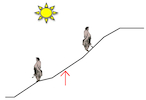
Blending Box Experiments:
Click image to play movie in new window
Tweets by redhenlab