|
Selected Chapters and Articles
|
|
Ghosal, Sabyasachi, Austin Bennett, and Mark Turner. 2024. "The Red Hen Audio Tagger." Linguistics Vanguard. https://doi.org/10.1515/lingvan-2022-0130.
Publicly available, open source: RHAT uses deep learning to tag audio elements frame by frame, generating metadata tags that can be utilized in various data formats for analysis. Seamless integration with ELAN.
|

|
|
|
Turner, Mark. 2023. "Human-Scale Meaning and Communication." Handbook of Cognitive Semantics. Edited by Thomas Li with an introduction by Leonard Talmy. Brill Academic Publishers. https://doi.org/10.1515/lingvan-2022-0017. Download.
|

|
|
|
Khasbage, Yash, Daniel Alcaraz Carrión, Jennifer Hinnell, Frankie Robertson, Karan Singla, Peter Uhrig, & Mark Turner. 2022. "The Red Hen Anonymizer and the Red Hen Protocol for de-identifying audiovisual recordings.” Linguistics Vanguard. https://doi.org/10.1515/lingvan-2022-0017. Download.
|
|
|
|
Turner, Mark. 2022. “Multimodal Body, Multimodal Mind, Multimodal Communication.” In Colston, Herbert, Teenie Matlock, & Gerard Steen, editors. Dynamism in Metaphor and Beyond. Amsterdam: John Benjamins.
|

|
|
|
McCubbins, Colin H., Mathew D. McCubbins, & Mark Turner. 2021. “Building a new rationality from the new cognitive neuroscience.” In Viale, Riccardo, editor, The Routledge Handbook of Bounded Rationality. Routledge.
Download.
|

|
|
|
Turner, Mark. 2020. “Constructions and Creativity.” In Hoffmann, Thomas, editor, Construction Grammar and creativity: Evolution, psychology, and cognitive science, a special issue of Cognitive Semiotics, 13:1. https://doi.org/10.1515/cogsem-2020-2019.
Download.
The first principle of cognitive linguistics is to look for the origins of linguistic powers in robust mental operations not specific to language. For millennia, language science has assumed that human beings possess mental operations for unifying, combining, and merging patterns to create expressions, and that, conversely, they can analyze expressions they encounter to recognize patterns that were combined to produce them. The third section of this article reviews some of the literature concerned with these powers to combine patterns into expressions and to analyze expressions into patterns that were blended to create them. Any assumption about such a linguistic power takes out a loan on theory that must be cashed out with a non-language-specific explanation if the theory is to count as cognitive. One can stipulate to the existence of some unexplained power that is needed for linguistic performance, but that stipulation is insubstantial until it is grounded in a demonstrated non-language-specific operation. An assumption or stipulation about a linguistic power is cashed out when we locate and model the non-language-specific cognitive operations that make that linguistic power possible. The first section of this article presents the proposition that the non-language-specific mental operation that accounts for these linguistic powers is blending, otherwise known as conceptual integration. The second section provides a topical review of blending in specific communicative form-meaning pairs and their combination. Blending is the foundation of creativity in communication, or, more specifically, in the creation and combining of form-meaning pairs, also called “constructions.”
|

|
|
|
McCubbins, Mathew D. and Mark Turner. 2020. “Collective Action in the Wild.” Pennisi, Antonio & Alessandra Falzone, editors. The Extended Theory of Cognitive Creativity. (Perspectives in Pragmatics, Philosophy & Psychology). Chapter 6. Springer.
Download.
|

|
|
|
Turner, Mark. 2020. Suggestive Landscape. Zeitschrift für Anglistik und Amerikanistik, 68:4. Special Issue: Multimodal Research in Linguistics. Guest Editor: Peter Uhrig. 451–466.
Blended Classic Joint Attention (BCJA) can deploy blends of form-meaning pairs across multiple modalities to suggest paths along which to construct meaning rather than to make assertions or convey information. An illustration is provided of suggestive landscapes, focusing on blended classic joint attention in the construal of an American college campus.
|

|
|
|
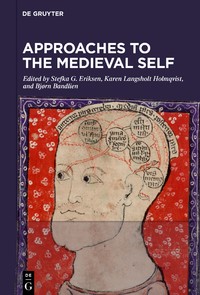
Eriksen, Stefka & Mark Turner. 2020. “Cognitive Approaches to Old Norse Literature.” In Eriksen, Stefka, Karen Langsholt Holmqvist, & Bjørnet Bandlien, editors, Approaches to the Medieval Self: Representations and Conceptualizations of the Self in the Textual and Material Culture of Western Scandinavia, ca. 800-1500. Open Access. DeGruyter. Download.
Book Launch for Approaches to the Medieval Self, including Eriksen & Turner, “Cognitive Approaches to Old Norse Literature.” Register to attend virtually.
Publisher's description: "The main aim of this book is to discuss various modes
of studying and defining the medieval self, based on a wide span of sources from
medieval Western Scandinavia, ca. 800–1500, such as archaeology, architecture
and art, documents, literature, and runic inscriptions. The book engages with
major theoretical discussions within humanities and social sciences, such as
cultural theory, practice theory, and cognitive theory. The authors investigate
how the various approaches to the self influence our own scholarly mindsets and
horizons, and how they condition what aspects of the medieval self are ‘visible’
to us. Utilizing this insight, we aim to propose a new syncretic approach
towards the medieval self, not in order to substitute excellent already existent
models, but in order to foreground the flexibility and the complementarity of
the existent theories, when these are seen in relationship to each other. The
self and how it relates to its surrounding world and history is a main concern
of humanities and social sciences. Studying the concept of the medieval self in
a theoretical flexible and interdisciplinary manner has the potential to raise
our awareness of our own position and agency in various social spaces today."
|
|
|
|
"Avant-Propos." In Albano, Mariangela. 2020. Blending et analogie. Berlin: Peter Lang.
|

|
|
|
Engh, Line & Mark Turner. 2019. “A Case Study of Symbolic Cognition.” In Line Engh, editor, The Symbolism of Marriage in Early Christianity and the Latin Middle Ages: Images, Impact, Cognition. Amsterdam University Press. 13-35.
The introductory chapter by Engh and Turner gives an overview of how
marriage served as a structuring frame in early Christianity and the
Latin West and an outline of the individual chapters. Discussing the
nature of symbolism and its importance to human cognition, the chapter
positions the book within an ongoing dialogue between the humanities
and cognitive science. These two fields share the basic assumption
that producing, communicating, and recognizing meaning is a creative,
contingent process – it is not something ‘already there,’ in a text or in an
image, but is constructed and reconstructed by human minds in human
bodies, in social and institutional spaces, and in natural and cultural
environments. Understanding the ways humans process metaphor helps
us understand the relation between various kinds of discourses and the
ways people lived, thought, and believed.
|

|
|
|
Turner, Mark. 2019. “Compression and Decompression in Mathematics.” In Math Cognition, edited by Marcel Danesi. A volume in the series Mathematics in Mind. Chapter 2. Springer.
Download.
|
|
|
|
Turner, Mark, Maíra Avelar, & Milene Mendes de Oliveira. 2019. "Blended Classic Joint Attention and Multimodal Deixis."
Signo. 44:79, pages 03-09.
|
|
|
|
Fauconnier, Gilles & Mark Turner. 2019. “Preface” to the Chinese translation of The Way We Think. Translated by Yang Bo. Beijing: The Commercial Press.
|
|
|
|
Turner, Mark. 2019. “Preface” to the Korean translation of The Origin of Ideas. Translated by Dong-hwan Kim. Kyungbook National University Press.
|
|
|
|
Turner, Mark & Mathew D. McCubbins. 2018. Selves and Choices. Reti, saperi, linguaggi: Italian Journal of Cognitive Sciences. 5:1. pages 47-58. doi: 10.12832/90970. Download
|
|
|
|
Turner, Mark. 2018. The Role of Creativity in Multimodal Construction Grammar.
Zeitschrift für Anglistik und Amerikanistik. Volume 66, Issue 3. Pages 357–370. https://doi.org/10.1515/zaa-2018-0030. Download.
|
|
|
Turner, Mark & Mathew D. McCubbins. 2018. “Selves and Choices.” Reti, saperi, linguaggi: Italian Journal of Cognitive Sciences. 5:1. pages 47-58. doi: 10.12832/90970
|
Turner, Mark, Tarek Besold, & Roberto Confalonieri. 2018. “Foreword” to Concept Invention: Foundations, Implementation, Social Aspects, and Applications. Edited by Roberto Confalonieri, Alison Pease, Marco Schorlemmer, Tarek R. Besold, Oliver Kutz, Ewen Maclean, and Maximos Kaliakatsos-Papakostas. Springer. A volume in the series Computational Synthesis and Creative Systems.
Publisher's description: “This book introduces a computationally feasible, cognitively inspired formal model of concept invention, drawing on Fauconnier and Turner's theory of conceptual blending, a fundamental cognitive operation. The chapters present the mathematical and computational foundations of concept invention, discuss cognitive and social aspects, and further describe concrete implementations and applications in the fields of musical and mathematical creativity.”
|
|
|
|
Steen, Francis F., Anders Hougaard, Jungseock Joo, Inés Olza, Cristóbal Pagán Cánovas, Anna Pleshakova, Soumya Ray, Peter Uhrig, Javier Valenzuela, Jacek Woźny and Mark Turner. 2018. Toward an Infrastructure for Data-driven Multimodal Communication Research.
Linguistics Vanguard. Volume 4, Issue1, Pages 1-9. https://doi.org/10.1515/lingvan-2017-0041.
|
|
|
|
Turchyn, Sergiy, Inés Olza Moreno, Cristóbal Pagán Cánovas, Francis Steen, Mark Turner, Javier Valenzuela, and Soumya Ray. 2018. Gesture Annotation with a Visual Search Engine for Multimodal Communication Research.
IAAI-18.
|
|
|
|
Turner, Mark. 2017. “Slavic Red Hen, or, Laura Janda and the Dream of the Multimodal Constructicon.” In Makarova, Anastasia, Stephen M. Dickey, and Dagmar Divjak, editors. Each Venture a New Beginning: Studies in Honor of Laura A. Janda. Bloomington: Slavica Publishers.
|

|
|
|
Turner, Mark. 2017. “Imaginary Conversations.”Journal of Foreign Languages and Cultures. Volume 1, Number 1, pages 95-101.
Download.
|

|
|
|
Joo, Jungseock, Francis Steen, & Mark Turner. 2017. Red Hen Lab: Dataset and Tools for Multimodal Human Communication Research.
KI - Künstliche Intelligenz.
Springer. Special edition edited by Mehul Bhatt & Kristian Kersting. https://doi.org/10.1007/s13218-017-0505-9. Print ISSN 0933-1875. Online ISSN1610-1987. Download from publisher. Download from SSRN.
|
|
|
|
Turner, Mark. 2017. Polytropos and Communication in the Wild. The Cambridge Handbook of Cognitive Linguistics, edited by Barbara Dancygier. Pages 93-98.
|
|
|
|
Turner, Mark. 2017. Conceptual compression and alliterative form. English Language and Linguistics Volume 21, Issue 2. DOI 10.1017/S1360674317000090. Pages 221-226
|
|
|
|
Turner, Mark. 2017. Multimodal Form-Meaning Pairs for Blended Classic Joint Attention. Linguistics Vanguard. DOI 10.1515/lingvan-2016-0043. Download.
|
|
|
|
Turner, Mark. 2016. The Performing Mind. In Theatre, Performance, and Cognition: Languages, Bodies, and Ecologies, edited by
Rhonda Blair and Amy Cook. Bloomsbury Methuen. Pages 68-74. Download.
"Mark Turner’s [contribution] is invaluable to understanding how to analyze and interpret cognitive science sources, as it provides information on the strengths and weaknesses of overarching methodological concepts within the fιeld." —Scott Knowles, Journal of Dramatic Theory and Criticism, Spring 2018, 32(2), page 173.
|
|
|
|
Turner, Mark. 2016. "La Integración Conceptual Como Un Programa De Investigación Para La Creatividad Computacional." In Creatividad Computacional, edited by Rafael Pérez y Pérez. Grupo Editorial Patria. ISBN: 978-607-744-284-4. Pages 33-50. Download.
|
|
|
| Pagán Cánovas, Cristóbal and Mark Turner. 2016. Generic integration templates for fictive communication. In The Conversation Frame: Forms and Functions of Fictive Interaction, edited by
Esther Pascual and Sergeiy Sandler. John Benjamins. Pages 45-62. Download.
|
|
|
| Turner, Mark. 2015. "Blending in Language and Communication," in Dąbrowska, Ewa and Dagmar Divjak, editors, Handbook of Cognitive Linguistics. De Gruyter Mouton, Berlin. Pages 211-232. Download.
|
|
|
Lucas, Gale, Mathew D. McCubbins, & Mark Turner. 2015. "Against Game Theory." Emerging Trends in the Social and Behavioral Sciences 1-16.
John Wiley & Sons. Download.
|
|
|
McCubbins, Mathew D. & Mark Turner. 2014. "Are Individuals Fickle-Minded?" In Zahle, Julie & Finn Collin, editors, Rethinking the Individualism-Holism Debate: Essays in the Philosophy of Social Science. Springer. Pages 237-252.
|
|
|
| Steen, Francis & Mark Turner. 2013. “Multimodal Construction Grammar” in Borkent, Michael, Barbara Dancygier, and Jennifer Hinnell, editors, Language and the Creative Mind. Stanford, CA: CSLI Publications/ University of Chicago Press.
Pages 255-274. Download.
|
|
|
http://press.uchicago.edu/dms/ucp/books/jacket/15/9781575866710.jpg
| Turner, Mark. 2013. “Preface” to Ensayos semióticos II. Semiótica e integración conceptual.
|
|
|
| McCubbins, Mathew D. & Mark Turner. 2013. “Concepts of Law.” Southern California Law Review. Volume 86, Issue 3, 517-572. Download.
Law depends for its existence and practice upon vast concepts that stretch across time, space, causation, and agency. Vast concepts are fundamental from legislation and interpretation to enforcement and adjudication; from weighing evidence to establishing motive and intent; and from imposing fines or sentences to awarding compensation. But all of human thought and memory is just here and now. Forming and understanding vast legal concepts can be difficult, and failures arise in theory and practice when legal concepts fail to meet certain constraints on intelligibility, congeniality, efficiency, and memorability. We present a model of the formation of legal concepts and some constraints on their practical utility. We also suggest a research agenda that may allow us to better understand what sorts of legal concepts work, and which ones we discard and when.
|
|
|
|
Nesset, T., A. Endresen, L. Janda, A. Makarova, F. Steen, & M. Turner. 2013. "How here and now in Russian and English establish joint attention in TV news broadcasts." Russian Linguistics 37:229–251 DOI 10.1007/s11185-013-9114-x:w
. Click here for the supporting data.
This article presents a thorough investigation of the five Russian deictic wordsthat correspond to the English meanings ‘here’ and ‘now’: zdes’, tut, sejčas, teper’ and vot. We analyze data from the Russian National Corpus and data from Russian TV news broadcasts. On the basis of the corpus data, we propose a radial category network consisting of nine subcategories, which encompass all five words, and show that although the deictic words have overlapping distributions, they all have distinct ‘radial category profiles’ in the sense that they display different centers of gravity in the network. We advance the ‘Minimal Adaptation Hypothesis’, according to which language makes adaptations that are as small as possible, when applied to a new setting, such as the one created by TV. |
|
|
|
McCubbins, Mathew D., Mark Turner, and Nicholas Weller. 2013. “Testing the Foundations of Quantal Response Equilibrium.” In Greenberg, A. M., Kennedy, W. G., Bos, N. D. (Eds.), Social Computing, Behavioral-Cultural Modeling and Prediction. Lecture Notes in Computer Science, Volume 7812. Berlin: Springer. Pages 144-153. Download.
Science fiction has explored in many ways the intimate interaction of people with computers. The protagonist in Blade Runner, whose job is to kill replicants, hooks up with one. An acquaintance says to him, "It's too bad she won't live! But then again, who does?" Much of the analysis of human decision-making depends upon notions of how people think about each other. But what happens when the other agent in your interdependent decision-making is a computer? We tested that. It is well known that people routinely deviate from Nash equilibrium in making decisions. "Quantal Response Equilibrium" theories propose that people are boundedly rational; that the more costly the deviation from Nash equilibrium, the rarer the deviation will be; and that two main sources of these deviations are social preferences about other people and lack of certainty about how they will behave. We stripped off those two possible sources by having subjects play against computer algorithms that they understood would choose strictly so as to maximize their own earnings in each local task. Our subjects still often deviated from Nash equilibrium. Moreover, the deviations were different for each and every game. Our preliminary conclusion is that QRE is not useful at predicting human behavior, and is of limited use in explaining human behavior across even a small range of highly similar decisions. |
|
|
| Turner, Mark. 2013. “Iconicity By Blending.” In Iconic Investigations, edited by Lars Elleström, Christina Ljungberg, and Olga Fischer. John Benjamins. Pages 13-24. |
|
|
| Antović, Mihailo, Austin Bennet, and Mark Turner. 2013. “Running in Circles or Moving Along Lines: Conceptualization of Musical Elements in Sighted and Blind Children.” Musicae Scientiae (the Journal of the European Society for the Cognitive Sciences of Music), 17: 229-245. |
|
|
| Turner, Mark. 2012. "Mental Packing and Unpacking in Mathematics." In Mariana Bockarova, Marcel Danesi, and Rafael Núñez, editors, Semiotic and Cognitive Science Articles on the Nature of Mathematics. Munich: Lincom Europa. Interdisciplinary Studies on the Nature of Mathematics 01. Pages 248-267.
|
|
|
| McCubbins, Mathew D., Mark Turner and Nicholas Weller. 2012. “The Theory of Minds Within the Theory of Games.” In Arabnia, H. R., de la Fuente, D. Kozerenko, E. G., LaMonica, P. M., Liuzzi, R. A., Olivas, Jose A., Solo, A. M. G., and Waskiewica, T., editors, Proceedings of the 2012 International Conference on Artificial Intelligence, Vol. I. CSREA Press, pages 515-521.Download.
Classical rationality as accepted by game theory assumes that a human chooser in a given moment has consistent preferences and beliefs and that actions result consistently from those preferences and beliefs, and moreover that these preferences, beliefs, and actions remain the same across equal choice moments. Since, as is widely found in prior experiments, subjects do not follow the predictions of classical rationality, behavioral game theorists have assumed consistent deviations from classical rationality by assigning to subjects certain dispositions — risk preference, cognitive abilities, social norms, etc. All of these theories are fundamentally cognitive theories, making claims about how individual human minds work when choosing. All of them are fundamentally wrong in assuming one kind of consistency or another. Or at least, all of the proposals for consistency in belief, preference, and action with which we are aware turn out to be wrong when tested experimentally.
|
|
|
| McCubbins, Mathew D. & Turner, Mark. 2012. “Going Cognitive: Tools for Rebuilding the Social Sciences.” In Sun, Ron, ed. Grounding Social Sciences in Cognitive Sciences. Cambridge MA: MIT Press. Chapter 14. 387-414. Download.
This chapter is an attempt to provide a few examples of the ways in which routine methods of cognitive science could be applied to improve social scientific investigations concerned with judgment, decision, reason, and choice. Since judgment, decision, reason, and choice are cognitive and conceptual operations, these foundations should draw as much as possible on the best research from cognitive science.
|
|
|
| McCubbins, Mathew D., Mark Turner and Nicholas Weller. 2012. “The Mythology of Game Theory.” In Yang, S. J., Greenberg, A., and Endsley, M., editors, Social Computing, Behavioral-Cultural Modeling, & Prediction. Berlin: Springer Lecture Notes in Computer Science, Volume 7227, pages 27-34. Download.
Non-cooperative game theory is at its heart a theory of cognition, specifically a theory of how decisions are made. Game theory's leverage is that we can design different payoffs, settings, player arrays, action possibilities, and information structures, and that these differences lead to different strategies, outcomes, and equilibria. It is well-known that, in experimental settings, people do not adopt the predicted strategies, outcomes, and equilibria. The standard response to this mismatch of prediction and observation is to add various psychological axioms to the game-theoretic framework. Regardless of the differing specific proposals and results, game theory uniformly makes certain cognitive assumptions that seem rarely to be acknowledged, much less interrogated. Indeed, it is not widely understood that game theory is essentially a cognitive theory. Here, we interrogate those cognitive assumptions. We do more than reject specific predictions from specific games. More broadly, we reject the underlying cognitive model implicitly assumed by game theory.
|
|
|
| McCubbins, Mathew D., Mark Turner and Nicholas Weller. 2012. “The Challenge of Flexible Intelligence for Models of Human Behavior.” AAAI Spring Symposium Series 2012. Technical Report SS-12-03. pp. 54-60. Available here. Download.
Game theoretic predictions about equilibrium behavior depend upon assumptions of inflexibility of belief, of accord between belief and choice, and of choice across situations that share a game-theoretic structure. However, researchers rarely possess any knowledge of the actual beliefs of subjects, and rarely compare how a subject behaves in settings that share game-theoretic structure but that differ in other respects. Our within-subject experiments utilize a belief elicitation mechanism, roughly similar to a prediction market, in a laboratory setting to identify subjects' beliefs about other subjects' choices and beliefs. These experiments additionally allow us to compare choices in different settings that have similar game-theoretic structure. We find first, as have others, that subjects' choices in the Trust and related games are significantly different from the strategies that derive from subgame perfect Nash equilibrium principles. We show that, for individual subjects, there is considerable flexibility of choice and belief across similar tasks and that the relationship between belief and choice is similarly flexible. To improve our ability to predict human behavior, we must take account of the flexible nature of human belief and choice.
|
|
|
| "The Embodied Mind and the Origins of Human Culture." 2011. In Cognition and Culture: An Interdisciplinary Dialogue. Edited by Ana Margarida Abrantes & Peter Hanenberg. Frankfurt & Berlin: Peter Lang. Pages 13-27. Download. |
|
|
| "The Way We Imagine." 2011. In
Theory of Mind and Literature, edited by Paula Leverage, Howard Mancing, Richard Schweickert, and Jennifer Marston William. Purdue University Press. Pages 41-62. [A reprint of an article first published in 2007 in Proceedings of the British Academy 147, 213–236.]
In The Way We Think (2002), Gilles Fauconnier and I proposed that the basic mental operation of conceptual integration, also known as "blending," has been present and evolving in various species for a long time. Modern human beings evolved not an entirely different kind of mind, but instead the capacity for the strongest form of conceptual integration, known as "double-scope" or "vortex" blending. It is the engine of human imagination.
|
|
|
| “Conceptual Blending.” 2010. The Cambridge Encyclopedia of the Language Sciences, edited by Patrick Colm Hogan. Cambridge, UK: Cambridge University Press. Pages 194-197.
“Parable.” 2010. The Cambridge Encyclopedia of the Language Sciences, edited by Patrick Colm Hogan. Cambridge, UK: Cambridge University Press. Pages 580-581.
|
|
|
| “De Rerum Natura: Dragons of
Obliviousness and the Science of Social Ontology.” 2009. In
Philosophy
of the Social Sciences: Philosophical Theory and Scientific Practice,
edited by Chrysostomos Mantzavinos. Cambridge, UK: Cambridge University
Press. Pages 28-40.
Social science would be easier if each aspect of higher-order
human cognition operated independently of the others. Then we
could treat human behavior as a linear sum of partitioned categories
of performance. John Searle has shed light on how this model fails
for language and social ontology, leading us to mistake rehearsing
tautologies for doing science. I assert that this failure is general
across a great range of aspects of higher-order human performance—language
being only one of them—and present a theory of their relations. |
|
|
| "The Scope of Human Thought." 2009.
On the Human. An on-line forum published by the National Humanities Center. Target article with commentary by other researchers and a response from the author.
Biologically, we resemble other animals, but mentally, we leave them in the dust. The scope of human thought is vast. Why are we so different? |
|
|
| "Signs of Intelligent Life." 2009.
Signs and Meaning: Five Questions. Edited by Peer Bundgaard and Frederik Stjernfelt. New York: Automatic Press/VIP. Pages 257-271. Download.
Human beings are, in their behavior, and especially in their ubiquitous creativity, dramatically unlike members of other species, despite the genetic and anatomical similarities. We create symbolic systems, signs, and new meaning. How can our distinctive ability to do so be explained? |
|
|
| "The Mind is an Autocatalytic Vortex." 2008.
In The Literary Mind, Volume 24 (2008) of REAL: Yearbook
of Research in English and American Literature, edited by
Jürgen Schlaeger. Tübingen, Germany: Gunter Narr Verlag.
December, 2008. Download.
Blending is indispensable for advanced narrative
cognition. In The
Literary Mind: The Origins of Thought and Language (1996),
I argued that the modern mind derives from our remarkable capacity
to deploy a cohort of basic mental operations—story, projection,
blending, and parable. These operations are a pack, a troupe,
a self-feeding cyclone, an autocatalytic vortex, a breeder reactor,
a dynamic heterarchy—choose your metaphor: they labor together.
Some of the evidence I presented in The Literary Mind can
be misinterpreted, it seems, as suggesting that advanced narrative
cognition comes first in the sequence, and that upon this rock
the other operations build their conceptual church. My purpose
here is to correct that misinterpretation. Mature narrative cognition
does not exist without blending. Blending is not a second step. |
|
|
| "The Origin of Language
as a Product of the Evolution of Double-Scope Blending."
2008. (With Gilles Fauconnier.) Commentary, Behavioral
and Brain Sciences.
Further work on the origin of language as derivative
of the origin of double-scope conceptual integration. Based on
chapter 9 of The Way We Think. |
|
|
| "The Origin of Language as a
Product of the Evolution of Modern Cognition." (With Gilles
Fauconnier.) 2008. In Laks, Bernard, et al., editors, Origin
and Evolution of Languages: Approaches, Models, Paradigms.
London: Equinox. Download.
Further
work on the origin of language as derivative of the origin of
double-scope conceptual integration. Based on chapter 9 of The
Way We Think. |
|
|
| Gilles Fauconnier & Mark Turner. 2008. "Rethinking Metaphor." 2008. In Ray Gibbs, editor, Cambridge
Handbook of Metaphor and Thought. New York: Cambridge University
Press, 53-66. Download. Cambridge Books Online. |
|
|
| "What are We?: The Convergence of Self and
Communications Technology." 2008. In Integration
and Ubiquity: Towards a Philosophy of Telecommunications Convergence,
edited by Kristóf Nyíri. Vienna: Passagen Verlag.
21-28. Download.
Because telecommunications technologies are built to be used at human scale, they provide powerful potential inputs to blended notions of self. It is not that these telecommunications technologies are blurring the boundaries of the self; rather, they are making it possible for us to have certain human-scale conceptions of self.
|
|
|
| "Frame Blending." 2008. In Frames,
Corpora, and Knowledge Representation, edited by Rema Rossini
Favretti. Bologna: Bononia University Press. 13-32. Download. |
|
|
| "The Way We Imagine." 2007. In Ilona Roth,
editor, Imaginative
Minds. Proceedings
of the British Academy. London: Oxford University Press &
the British Academy. [Proceedings of the British Academy 147, 213–236.] Pdf of draft. |
|
|
|
"The Art of Compression" in The
Artful Mind: Cognitive Science and the Riddle of Human Creativity.
Edited by Mark Turner. Oxford University Press, October 2006. Zipped
pdf version. |
|
|
|
"Compression and Representation." 2006. Language
and Literature. 15:1, 17-27. Download. |
|
|
| "Conceptual Integration" in The Oxford Handbook of Cognitive Linguistics. Edited by Dirk Geeraerts
and Hubert Cuyckens. Oxford: Oxford University Press, 2007. |
|
|
| "Mathematics
and Narrative". Paper presented at the International Conference
on Mathematics and Narrative, Thales & Friends, Mykonos, Greece,
12-15 July 2005. Pdf
version. |
|
|
| "The Literal versus Figurative Dichotomy" in The Literal
and Nonliteral in Language and Thought. Edited by Seana Coulson and Barbara Lewandowska-Tomaszczyk.
Frankfurt: Peter Lang, 2005. Pages 25-52. Excerpt with modifications
from a chapter in Figurative Language and Thought. Download. |
|
|
| "The Ghost of Anyone's Father."
Shakespearean
International Yearbook. Edited by Graham Bradshaw, Thomas Bishop
, and Mark Turner. Volume 4. Hants, U.K.: Ashgate Publishing Limited,
2004, pages 72-97. Part of a special section on “Shakespeare in
the Age of Cognitive Science,” guest editor, Mark Turner. Download. |
|
|
| "Double-scope stories." In Narrative
Theory and the Cognitive Sciences, edited by David Herman.
Stanford: CSLI,
2003, pages 117-142. Download. [Translation into Polish: "Opowieści amalgamatyczne." Translated by Jarosław Płuciennik. Teksty Drugie 2010:4 (124), 137-150.] |
|
|
| "The origin of
selkies." Journal
of Consciousness Studies, volume 11 (2004), numbers 5-6:
pages 90-115. Download. |
|
|
| "Polysemy and Conceptual Blending." (With
Gilles Fauconnier.) In Polysemy:
Flexible Patterns of Meaning in Mind and Language. Edited
by Brigitte Nerlich, Vimala Herman, Zazie Todd, and David Clarke.
Berlin & New York: Mouton de Gruyter, 2003: 79-94. A volume
in the series Trends in Linguistics. Download. |
|
|
|
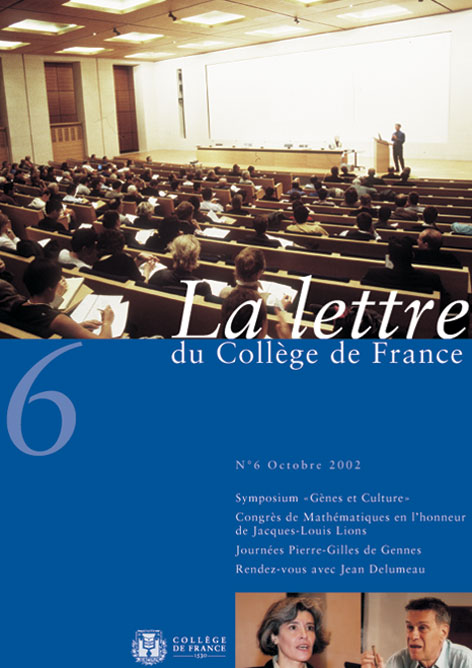
"L'intégration conceptuelle." La
Lettre du Collège de France. Number 6. October 2002. |
|
|
|
"Literacy and Cognition" in Reading
Between the Lines: New Perspectives on Foreign Language Literacy,
edited by Peter C. Patrikis. New Haven: Yale University Press, 2003,
pages 24-39. |
|
|
| "The Dynamics of Seduction." Apparatur:
Tidsskrift for litteratur og kulturr 4:2. August, 2002.
Odense, Denmark. pp. 20-22. (ISSN1601-5576) |
|
|
|
"Toward the Founding of Cognitive Social
Science." The Chronicle of Higher Education. 5 October
2001. |
|
|
|
Review of Leonard Talmy, Toward
a Cognitive Semantics. Two volumes. In Language: Journal of
the Linguistic Society of America, Vol. 78, No. 3, pp. 576-578, 2002. Download. |
|
|
|
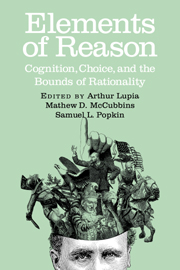
"Backstage Cognition in Reason
and Choice."
In Arthur Lupia, Mathew McCubbins, and Samuel L.
Popkin, editors, Elements
of Reason: Cognition, Choice, and the Bounds of Rationality.
New York: Cambridge University Press, Summer 2000. Pages 264-286. Download. |
|
|
|
"Compression and global insight." (With Gilles Fauconnier.) Cognitive Linguistics
11:3-4 (2000), pages 283-304. Download. |
|
|
|
"Conceptual Integration Networks".
(With Gilles Fauconnier). Cognitive Science. Volume 22, number
2 (April-June 1998), pages 133-187. Download Expanded Version. [Download original article]
| |
|
|
"Metaphor, Metonymy, and Binding". 2003. (With
Gilles Fauconnier). In Metaphor and Metonymy at the Crossroads. Edited by Antonio
Barcelona. Mouton de Gruyter, in press. A volume in the series Topics
in English Linguistics.
| |
|
|
"Forging Connections." In Computation
for Metaphor, Analogy, and Agents. Edited by Chrystopher Nehaniv.
Berlin: Springer-Verlag, 1999, pages 11-26. A volume in the series
Lecture Notes in Artificial Intelligence. Download.
| |
|
|
"A Mechanism of Creativity" (with
Gilles Fauconnier). Poetics Today. Volume 20, number 3 (Fall 1999),
pages 397-418. [Reprinted as "Life on Mars: Language and the Instruments
of Invention." In The
Workings of Language, edited by Rebecca Wheeler. Praeger,
1999. Pages 181-200.] Download. |
|
|
|
"Conceptual Integration in Counterfactuals" (With Gilles Fauconnier). Discourse
and Cognition. Edited by Jean-Pierre Koenig, et al. Stanford:
CSLI, 1998, 285-296. Download. |
|
|
|
"Principles of Conceptual Integration" (With Gilles Fauconnier). Discourse
and Cognition. Edited by Jean-Pierre Koenig, et al. Stanford:
CSLI, 1998, 269-283. |
|
|
|
"Conceptual Blending and Counterfactual Argument in the Social and
Behavioral Sciences." 1996. In Philip Tetlock and Aaron Belkin, editors, Counterfactual Thought Experiments in World Politics. Princeton,
N.J.: Princeton University Press, 1996, 291-295. Download. |
|
|
| "Poetry for the Newborn
Brain." [A commentary on Terrence Deacon, The Symbolic Species.]
1998. Bostonia, Spring, Number 1, 72-73. Download. |
|
|
|
"Cognitive Science and Literary Theory." Stanford Humanities
Review. 4:1 Supplement. (Spring 1994), 110-112. |
|
|
| Fauconnier, Gilles & Mark Turner. 1996. "Blending as a Central Process of Grammar." In Conceptual
Structure, Discourse, and Language. Edited by Adele Goldberg.
Stanford: Center for the Study of Language and Information (CSLI). Download expanded version. |
|
|
|
"Design for a Theory of Meaning" in
The Nature and Ontogenesis of Meaning. Edited by W. F. Overton
and D. S. Palermo. Hillsdale, NJ: Lawrence Erlbaum Associates, 1994. |
 |
|
|
"Conceptual Projection and Middle Spaces." (With Gilles Fauconnier.) UCSD Department of Cognitive
Science Technical Report 9401. April 1994. Download. |
|
|
|
"Conceptual
Integration and Formal Expression." (With Gilles Fauconnier).
Metaphor and Symbolic Activity, volume 10, number 3 (1995),
pages 183-203. Download. |
 |
|
|
"Language is a Virus." Poetics Today 13:4 (Winter 1992),
725-736. Download. |
 |
|
|
"As Imagination Bodies Forth the Forms of
Things Unknown." Review of Raymond W. Gibbs, Jr., The Poetics
of Mind. In Pragmatics and Cognition, 3:1 (1995) 179-185. Download. |
 |
|
|
"Propertius Through the Looking Glass: A Fragmentary Glance at the Construction of Pound's Homage." Paideuma. 5:2 (1976), 241-265. Download. |
 |
|
|
Working Papers
|
|
|
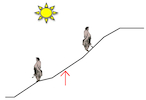
"Blending Box Experiments, Build 1.0." 23 January 2010. Download.
This working paper concerns a central human mental ability: the ability to blend two different conceptual arrays so as to produce an emergent outcome in the blend. The centrality of this mental operation is widely and robustly confirmed by the empirical data. But as far as I have found, there are no tests proposed in the literature to detect the presence or to measure the extent of this ability across the human lifespan (development, maturity, senescence), or under deficit (post-stroke or trauma), or across members of other species (mammalian, aviary). This working paper sketches some of the difficulties encountered in trying to devise such a test. These difficulties have not yet been surmounted. No completely worthy test has yet been found. |
Click image to play movie
in a new window
|
Interviews
|
| "Mental Spaces and Conceptual Integration: An interview on the legacy of Gilles Fauconnier". 6 July 2023. Corela [En ligne], HS-39. https://doi.org/10.4000/corela.16189.
|
|
|
| Cognitive Science in North Africa. 7 December 2010. |
|
|
| The New Evolutionary Enlightenment. 30 September 2009. |
|
|
| "Cognitive Linguistics." Desde el Exilo. 30 September 2009. |
|
|